Environmental Pest Management

11975 Portland Ave, Suite 126 , Burnsville, MN 55337

Working Hours
Mon - Fri 8:00a to 4:00p

Call us
952-432-2221

What Pest Problems Come With The Spring Thaw?

Snow

Spring is finally here! While snow is still falling over much of Minnesota, we can see the early signs of spring. Unfortunately, the spring thaw brings a whole host of problems. With the warmer temperatures and moisture, many bugs, such as mosquitos, come out in full force.

The thawing ground can also lead to foundation cracks and other problems with your home. Many of these issues create an accessible entrance for a variety of bugs.

At Environmental Pest Management, we want to help you prepare for the warmer weather, and the bugs it brings. We will provide regular pest management at your home, and promptly deal with any infestations that arise. You can trust us with your home, no matter the season. Spring brings a set of symptoms and solutions for pests.

Excess Moisture

As winter ice and snows melt, the significant amount of moisture becomes a problem. There are steps you can take to prevent excessive damage to your home.

Besides damage to your home, excess moisture is attractive to pests. Many bugs and insects, like mosquitos, are attracted to the water that is around your house. Eliminating this water will not only decrease the number of pests but also preserve the integrity of your home.

Also Read: Pesticide Safety in the Home

Water

How to Prevent Damage and Pests from Water

There are a few easy things you can do to prevent water buildup and damage in your home. If you have a basement, ensure that your sump pump is working correctly and that you have a battery backup just in case you lose power. You don’t want any water standing in your basement.

Inspect the outside of your home. Doing a thorough examination and removing any debris or buildup around your home will take away potential hiding places for pests. Plus, removing debris from gutters and downspouts will ensure water can freely flow away from your house, bringing the bugs with it.

Doors and windows are other places to inspect. If there are openings or cracks, bugs and water can get inside. Both of these things could cause damage to your home. Also, make sure your exterior walls are sealed, and there are no gaps in the siding or holes in the bricks.

Thoroughly inspect your foundation in the spring. Wet, soggy soil and landscaping around your home could adversely affect your foundation. If you notice any cracks in your foundation, there could be structural issues with your house. The cracks also provide a way for pests to get in.

To help repel bugs and insects, keep the landscaping of your home in good shape. Ensure there is proper drainage, so water flows away from your house. This strategy will help the lawn and keep away bugs. Also, make sure nothing is overgrown or in large piles around your home, to remove hiding places for insects.

Also Read: How to Help Bees

Pest

Pest Problems

If you do have standing water, and you have noticed those annoying biting insects, you are probably wondering how to get rid of mosquitos.

Mosquitoes lay their eggs either in water or around it. Females mosquitoes prefer standing water, frequently in a container made by humans. After the mosquito eggs hatch, they will become blooding-drinking adults in only one week.

How to Get Rid of Mosquitoes

The most important thing you can do to limit the number of mosquitoes in and around your home is to ensure there is no standing water. At least weekly, empty water from containers around your home.

Make sure you scrub and turn over any containers, such as flower pots, pet bowls, buckets, pools, birdbaths, and trash cans. Scrubbing the container will remove any mosquito eggs, and keeping the containers upside-down will ensure water does not collect again.

If you do need to store water for any reason, keep the container or pool tightly covered. A mosquito will not be able to get inside and lay their eggs if there is a lid over the water.

Mosquito

General Tips to Avoid Pests this Spring

In addition to monitoring your home for water issues and mosquitoes, several other strategies will help ensure pests don’t become a problem this spring. Keeping your home clean inside and out is essential to keeping bugs at bay.

Insects love clutter. Piles and enclosed spaces that are warm and safe are perfect for hiding out. A garage or shed full of clutter is a dream for bugs. The same goes for interior rooms. Don’t stop at piles. To avoid bugs in your home, go through your cabinets and pantry and toss opened or expired food.

Following a regular cleaning schedule will go a long way in keeping pests away from your home. Keeping dust and dirt outside will deter bugs, too. Along with cleaning, regular home maintenance is also vital. Keeping screens and door seals in working order goes a long way in protecting your home from pests.

Also Read: Natural Bug Repellents For Bug-Free BBQs

Cleaning Tools

Call Environmental Pest Management

If you are concerned about the spring thaw or have already seen some bugs around, call Environmental Pest Management. We will do a thorough inspection and find any pests that have already made their way in. We will also predict how bugs might enter your home and stop them before they can.

We want all pests, from mosquitoes and ants to mice and spiders, outside your home. To be successful, we have to take care of the inside and outside. We will get any unwelcome pests out, and make sure they stay there.

Most importantly, Environmental Pest Management customizes our service for each of our customers. No two homes with pests are the same, and no two treatments are the same. To create the best plan, we will combine our initial inspection with input from you, the customer.

At Environmental Pest Management, we want to be your partner in keeping your home pest-free. You don’t have to worry about how to keep mosquitoes out, anymore. While we can’t fix your foundation cracks, we can keep unwanted pests from taking advantage of them. Call Environmental Pest Management today.

Should Carpenter Ants Be On Your Radar This Spring?

carpenter ants

It’s spring! Flowers are blooming, and animals of every sort are having babies after the long winter. This includes the carpenter ants that may have been nesting in your home’s walls all winter or decided to move in this spring.

As the weather warms, you may notice swarms of flying ants in your home, especially in your kitchen or bathroom, they are most likely carpenter ants. The flying ants are female reproductives, and they are busy establishing world domination — well, at least the domination of your home — for their future generations.

There are 12,000 species of ants in the world, but only a few of them are household pests. The notorious carpenter ant is one of these problematic ant species, and their presence is on the rise in the United States.

Here at Environmental Pest Management, we are seeing an uptick of calls about possible carpenter ants. We’ve compiled some tips for what to look for and what to do if you suspect carpenter ants are building an empire in your home’s walls or foundation.

Also Read: What Pest Problems Come With The Spring Thaw?

Ants

What Do Carpenter Ants Look Like?

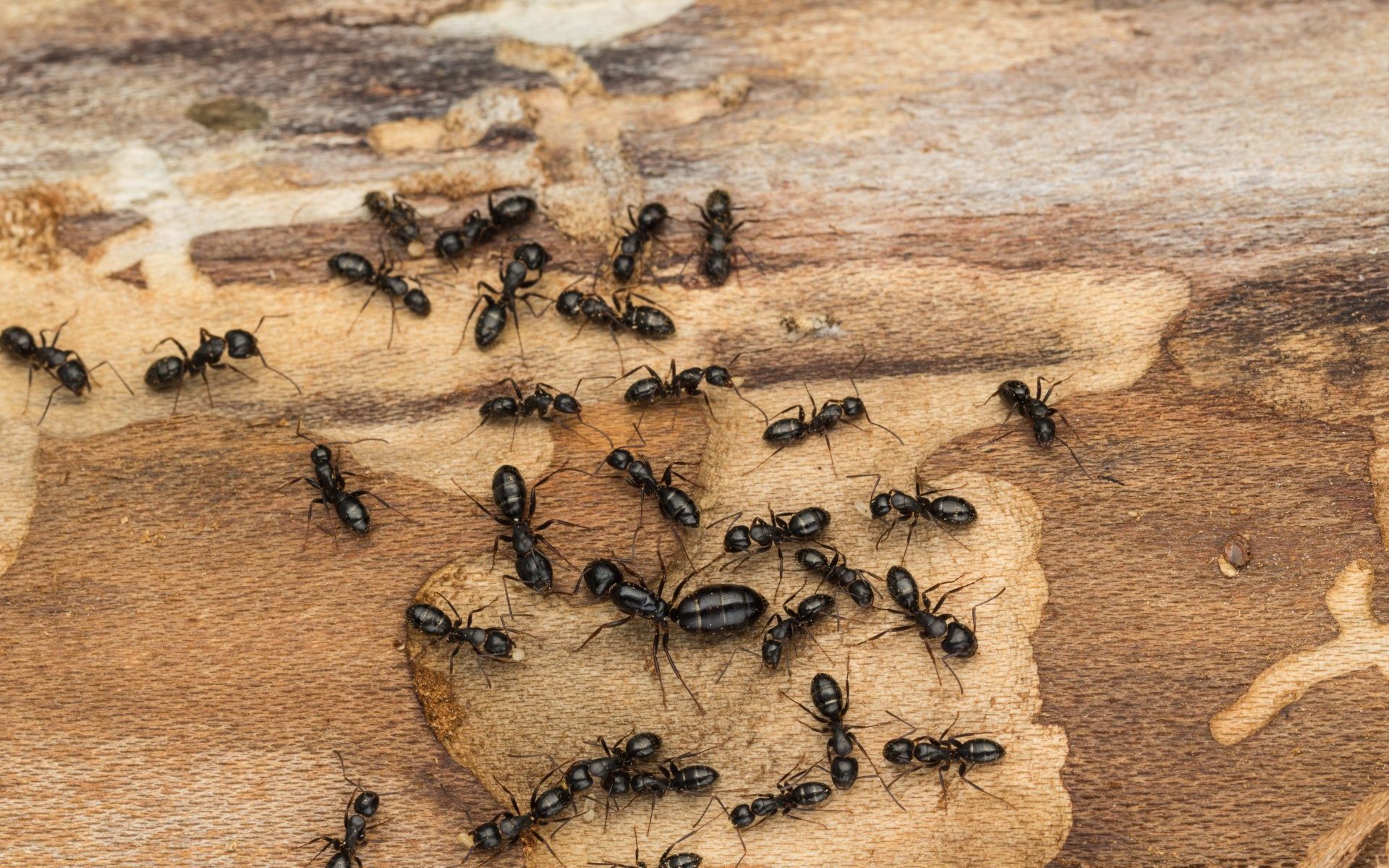
You’ve probably seen a lot of ants in your lifetime, but you won’t likely forget seeing a carpenter ant. By “ant” standards, they are big — between ¼” and ½” inch in size. They are also typically a solid black color, though some have a reddish brown abdomen. In the spring, they will swarm, so they’ll be hard not to notice. Swarming carpenter ants is a sure sign there is a colony nearby.

How Do Carpenter Ants Get In My House?

Carpenter ants get into your home the same way all critters and pests do: they find an opening and exploit it. Carpenter ants have the added bonus of being able to tunnel their way through wood so once they are inside and have some soft wood to chew on, they can make long highways through your walls and floors.

Top contenders for how carpenter ants got into your home include dampened wood from water leaks, poorly flashed windows, chimneys, vents, leaky windows or doors, or through your porch or deck timbers. They can also come inside from firewood your bring in from outside, especially if it was stacked in a pile that became moist and soft at the bottom.

Ants

But why do carpenter ants come in your home? First and foremost, for food. Carpenter ants will eat your pet food, dropped crumbs, and the carcasses of other insects. However, carpenter ants have a mandate to build and expand. Especially in the spring, carpenter ants are looking to grow their numbers and care for their young.

Your home may be attractive to start a new parent colony, which will contain an egg-laying queen, her brood, and an army of worker ants numbering 2000 or more. Also, if a successful parent colony is nearby — say in your woodpile, landscape timber, or that old stump  — your home is prime for establishing a satellite colony, composed entirely of worker ants.

Also Read: How to Help Bees

Carpenter ants love to make their nests in moistened wood, such as from a water leak. Consequently, places like inside the wall behind your dishwasher, toilet, sink, or tub, or in a porch column are prime places. You won’t see the nests or any exterior signs. You might find some chewed up wood debris that resembles sawdust. You might even see the ants themselves disappear into one of their tunnel entrances.

Ants

What Damage Do Carpenter Ants Do?

Like termites, carpenter ants can cause structural damage to your home as they hollow out the wood for their tunnels and nests. Unlike termites, however, carpenter ants usually take years to do significant damage.

The presence of carpenter ants typically means there is a moisture problem somewhere in your home. You’ll want to check for roof leaks, especially in your attic, or plumbing leaks. Since some leaks can be inside your walls, pay close attention to any staining or soft spots.

Because carpenter ants cause structural damage, you’ll want to get them out of your home as soon as possible.

Ants

Preventing Carpenter Ants

  • Fix water leaks, check under all your sinks, check your dishwasher, washer, and laundry room. Check faucets and behind your tub, if you can get to it.
  • Repair faulty flashing. Roof leaks are often caused by poorly flashed vents, chimneys, or trim.
  • Rubber seals around vents can also fail, so check those for possible replacement.
  • Clean your gutters to avoid water leaks.
  • Seal windows and doors. Weatherstripping and caulk are your friends.
  • Remove their sources of food. Store your food in tightly closed containers
  • Clean up any debris against your home’s foundation.
  • Store firewood away from your home and check for signs of ants before bringing wood inside.
  • Trim trees and shrubs so they can’t form a bridge.
  • Check to see if your home’s porch or deck post are in direct contact with the ground. These should sit on concrete piers or footers.

Ants

Getting Rid of Carpenter Ants

It can be easier said than done to get rid of carpenter ants because it is often quite difficult to locate their nests. If you can spot an ant trail and see where they are entering your walls, you might be able to use your vacuum’s nozzle attachment to pull many from the nest. That likely won’t solve the problem entirely though, as the nest may be deep within your walls.

Treating carpenter ants requires a combination of bait and insecticides, often injected into your walls. It also requires patience, strategy, and typically repeated treatments as well as plans to prevent reinfestation. While some home pest problems can be taken care of yourself, a carpenter ant infestation requires the services of a professional.

Also Read: Natural Home Remedies to Get Rid of Ants

Environmental Pest Management Can Help

If carpenter ants have infiltrated your home, give us a call. We have years of experience dealing with pests, including carpenter ants. We will pinpoint areas that carpenter ants find delicious and delightful and offer ways to make them less appealing. Our pros will locate the nest and eradicate the colony. We’ll treat your perimeter and create a plan for preventing their return.

Carpenter ants are incredibly important to our ecosystem as they help turn fallen branches and trees into fertile soil. They belong in the woods, not in your walls. Contact us to send carpenter ants packing and to keep your home pest-free.

The Best Ways to Get Rid of Mice this Spring

Mouse

You head out into the kitchen for a midnight snack, and when you turn on the light, you see the unmistakable scurry of a mouse as it disappears behind your stove. You might even let out the classic squeal of surprise at seeing this tiny home invader.

These mice may have been in your home all winter, but now that it’s spring they are getting more active and getting ready to breed. That one mouse you saw has a family, and soon that family will double, then triple, and in a few months, you’ll have a mouse infestation.

Although mice are cute, they have no place in your home with your pets and family. Mice carry parasites and diseases such as salmonella that can affect and infect your loved ones. If you have signs of mice in your home, it’s time to take action to prevent the problem from becoming worse. If you don’t notice any mice, you’ll still want to take the opportunity to keep them out.

Environmental Pest Management has years of experience when dealing with mice in homes. Here are some of the best ways to get rid of mice this spring.

Prevent & Protect

Making your home inhospitable is the first line of both offense and defense in your mouse-banishing strategy. Mice are looking for food, water, and shelter. Cut off their access to these three, and mice won’t want to take up residence.

Clean

Spring is a good time for a thorough home cleaning. Make sure there are no crumbs or debris that mice consider tasty treats. Check the top of your refrigerator, the bottom of your pantry, and under and behind your kitchen appliances. Wash dishes quickly rather than leaving them sitting out.

Also Read: 3 Proven Ways to Get Rid of Mice Fast

Mice

Stop leaks

Even a tiny leak from an under-sink pipe can be enough to keep a mouse hydrated. They will also find water seepage in your attic or from pipes in your walls. Ensure your home is watertight and repair even minor leaks.

Fortify your home against mice invaders

Mice can get into your home the same way you do — through the doors. Make sure you have door sweeps to prevent them from being able to squeeze under them. Watch for small holes, especially around pipes and vents. Mice can get into your home via a hole the diameter of a standard No. 2 pencil. Invest in longer-lasting silicone caulk or use pieces of copper or aluminum wire pot scrubbers to fill the gaps and keep mice out.

Rat

Trap & Dispose

Unfortunately, there is not an effective way to remove mice from your home without killing them. Mice have excellent senses of direction. After all, they can find their way through the maze of your home’s walls and pop out for their favorite morsel. Mice that have been trapped alive and relocated doggedly find their way back to your home with their instincts and wiles.

The best way to get rid of mice is to use mouse traps. The standard wood and wire versions that have been around for decades are still a tried-and-true method. Try the professional grade traps for an improved catch rate. Newer plastic models that resemble binder clips work the same way as the standard wood and wire versions but are more expensive.

While mouse traps are relatively simple mechanical devices, there is a skill in knowing how to trap these sneaky rodents effectively.

Also Read: Winterizing Your Home Against Rodents

Rat

Location

Place traps in areas where there is high mice activity. Good places are along baseboards (mice don’t like to go out into open spaces), behind appliances, behind objects, and in darkened corners. Place traps perpendicular to the wall with the trigger end closest to the wall, or if parallel to the wall, set in pairs with the bait on opposite ends to attract mice coming from either direction.

Quantity

Be sure to use enough traps. Some will fail, some will have the bait stolen, some won’t be discovered, some will be avoided. Go for saturation.

Bait

Use a high protein bait, such as peanut butter, fried bacon, salami, or other mice favorites such as oats, and chocolate. The success of your bait depends upon the availability of other food, so be sure to clean thoroughly before setting traps. If you have multiple mice, setting traps with a variety of bait will attract differing palates. It’s also a good idea to use an unusual treat as bait, to entice them to investigate. If they are more accustomed to getting your fallen breakfast crumbs, for example, peanut butter or chocolate might be more attractive.

Mouse Trap

Take advantage of the first night

The first night you set traps will be the most productive, and your catch rate will go down from there. Who knows? Maybe mice who witness or survive spread the word? Have a plan for the first night and make an impact.

Secure traps to the floor

If a mouse is only trapped by their arm, leg, or tail, they can run off with a trap that isn’t secured to the floor. A sticky putty is an acceptable way to do this without using nails.

Consult a Friendly Pest Removal Pro

At Environmental Pest Management, we are ready to help you prevent or correct a mouse infestation in your home. As you tackle your spring cleaning, if you find evidence of mice taking up residence, give us a call. We’ll do an inspection and help create a plan to keep your home pest-free.

Proven Ways to Treat a Centipede Infestation

bugs

Do you think you might have centipedes in your house? These creepy creatures are continually finding their way into homes. Whether they are searching for food or warmth, your home looks like a desirable and safe place to centipedes and other bugs.

If you have seen a house centipede, there’s no need to worry. There are ways to remove them from your home and deter them from coming back. At Environmental Pest Management, we specialize in removing pests safely and keeping them out.

What Do Centipedes Look Like?

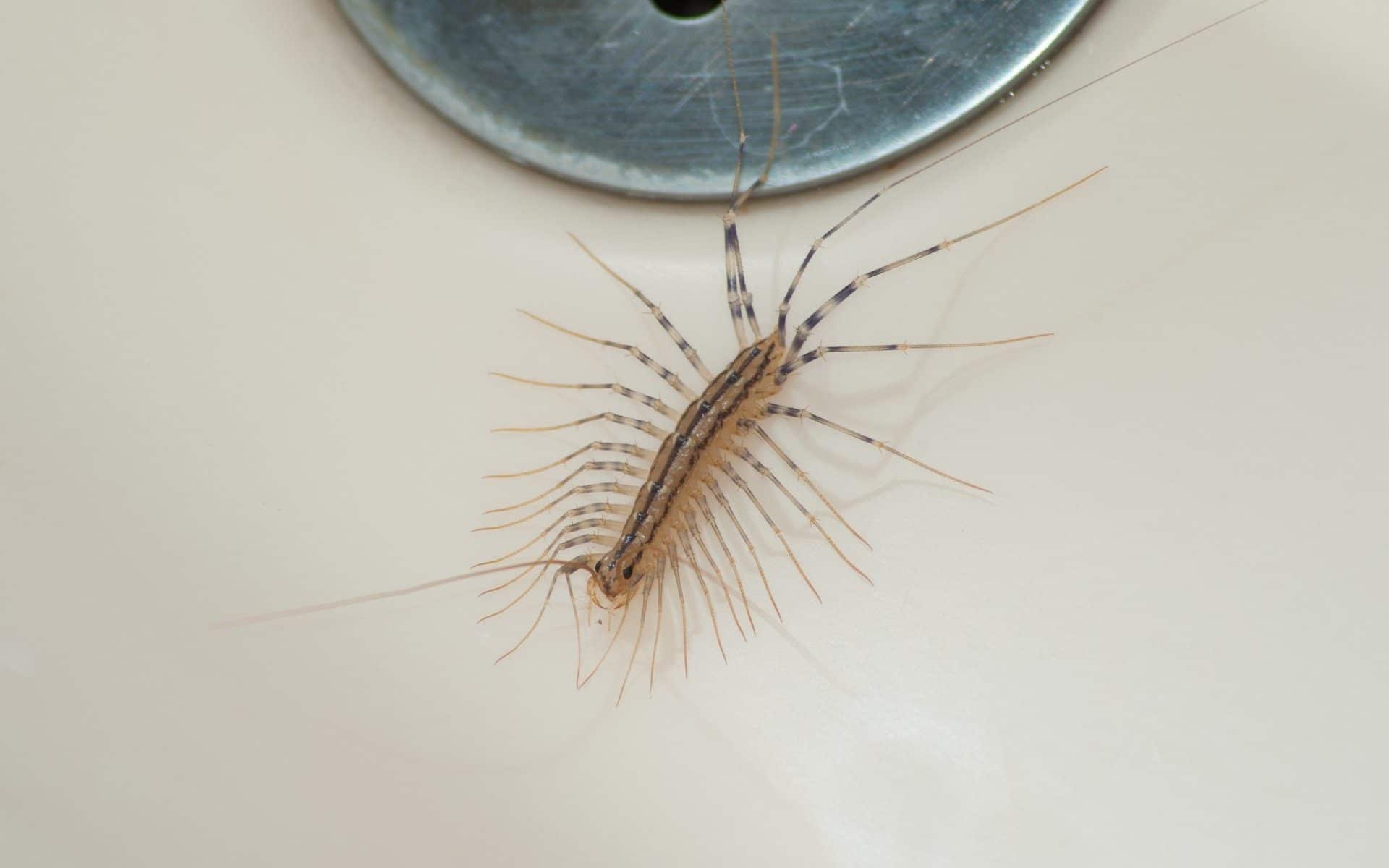
The common house centipede is a long and flattened arthropod with many legs. While they don’t have a hundred legs as their name implies, they do have one pair of legs for each body segment, up to 15 pairs of legs. In females, the last pair of legs is twice the length of their body.

The body of a centipede is about an inch to an inch and a half long, but that amount can triple when you include the antennae and back legs: up to three to four inches in length. Their legs are banded, meaning they alternate light and dark colored. Their body is a translucent yellow with three dark stripes down the length.

Larvae, or newly hatched centipedes, are very seldom seen. However, they only have four pairs of legs. As they molt through five stages, they will have five, seven, nine, eleven, and thirteen pairs of legs. Each centipede larva will molt five more times before it is considered an adult with all fifteen pairs of legs.

Centipedes are predators and feed on many other insects. Centipedes have poison glands and can inject venom with their bites, although they seldom do so. If a centipede bites you, you will most likely experience temporary pain localized to the bite location.

A female centipede can survive for several years and have up to 150 offspring during their lifetime.

The house centipede is thought to have originated in the Mediterranean area. The arrived in Mexico and the Southern U.S. through shipping containers, and are now widespread throughout North America.

Also Read: 5 Ways to Keep Your Home Centipede Free Through the Winter Months!

bugs

Where to Find Centipedes?

If you have centipedes in your house, you are most likely to find them under furniture or in places that are damp, dark, and protected. Outside your home, you may find centipedes under boards, logs, or rocks. They prefer to be hidden and out of sight.

Centipedes prefer to hide during the day. They will stay in a dark and moist location during daylight hours then come out at night to hunt for food. Their favorite foods are silverfish, firebrats, larvae of carpet beetles, cockroaches, and spiders. If you have an infestation of any of these other insects, the chances are good that you have centipedes as well.

Many homeowners report seeing centipedes dart across their floor. Because they are secretive and prefer their privacy, they hide most of the time. When they must move around, they do so quickly. This fast motion combined with all their legs is often scary to the humans who spot them.

bugs

How and Why Should You Get Rid of Centipedes?

It is important to get rid of centipedes because they can be harmful. While their bites are not extremely dangerous, they are painful. You do not want your small children coming in contact with them.

Centipedes in your house are often a sign you have other infestations. Because centipedes feed on other arthropods, their presence in your home means there is a food source. You will want to deal with the centipedes as well as what they are eating.

Managing and limiting the centipedes’ food source will drastically reduce any infestation you might have. Discovering their main meal ticket and dealing with that problem will often send the centipedes packing as well.

Ensuring your house is adequately sealed and protected will reduce both centipedes and everything they eat. Do a thorough inspection inside and outside your home. You are looking for cracks and crevices in your foundation or walls that would allow entry into your home. Sealing and filling these entry-points should keep out many of the problems.

Take some time to seal any covers to sump pumps or other openings outside your home with a screen and caulk. Ensure all your windows have screens, as well as floor drains. Pests are determined to get into your home and will do everything they can to find a way.

Because centipedes prefer dark and moist places, using a dehumidifier can help keep them away. Treating the soil around your home and ensuring there is no standing water near your foundation is also a good idea.

You can also look for a natural repellent that is safer to use. Both boric acid and diatomaceous earth pose minimal risks to humans and other mammals that might come in contact with them. You will want to know where centipedes are hiding in order to use these powders effectively.

Also Read: Secret Bug Breeding Grounds in Your Home This Winter

bugs

Call Environmental Pest Management

If you think you have house centipedes, call Environmental Pest Management right away. We ensure that every pest removal product we use is safe for families, has little to no odor, and is only used where necessary. Our staff is well-trained and dedicated.

We do a thorough inspection of your home to ensure we are treating your infestation completely and effectively. We will provide an inspection for free and go over our plan with you, so you know what you can expect.

If you’re struggling with skittering centipedes in your house, we will eliminate them from the inside, then ensure they stay out with natural repellents applied on the outside.

We customize our plans for each customer, taking their needs and budget into account. Call Environmental Pest Management today and let’s see how soon we can get rid of any pests in your home.

Natural Home Remedies to Get Rid of Ants

ants

Little pesky ants all over your kitchen and bathroom counters are an unwelcome sight. No one likes to see that ants have found a way into their home and are taking up residence. Ants are not only annoying, but they can also get into your food and be hard to remove.

At the first sight of ants, you’ll want to take action. Once ants have scouted your home as a potential food source, you can bet that more are coming. Here at Environmental Pest Management, we are available to consult, prevent, and eliminate any pest problems. But until we can arrive, there are some effective natural home remedies we recommend.

Like all of our services, these home remedies are non-chemical and environmentally conscious. They are safe to use around your family and pets. Try out one of these methods to deter ants until Environmental Pest Management can remove them for good.

Vinegar – The Multi-Use Product

Vinegar is an excellent multi-use household product. From laundry to floors, kitchen counters, and more, vinegar is the perfect home remedy for a variety of needs. Another fantastic quality of vinegar is its ability to repel ants.

The strong smell of vinegar can deter ants from coming inside the home or bothering your garden. Mix vinegar with water in a spray bottle and spray areas where you find ants. You can spray it directly on ant hills in your garden, or spray your kitchen or bathroom counters, baseboards, and window sills. Just think, you can clean your counters with vinegar and keep the ants away at the same time!

Also Read: Natural Home Remedies to Get Rid of Ants

Vinegar

DIY Ant Bait

You can also make your own ant bait using some everyday items from your household cleaning cabinet and pantry. Many homes have borax on hand, whether as laundry powder, disinfectant, whitener, or kids’ slime activator. Borax, also known as sodium borate, is a mineral salt with a white, powdery appearance.

Among its other uses, borax is a mild pesticide. Once you determine the type of ants you have (ants that prefer sugar or ants that prefer protein), you can mix borax with honey, syrup, or jam (sugar-loving ants), or peanut butter (protein-eating ants) to create your own ant bait.

The ants will take the poisonous treat back to their colony, hopefully destroying them all. While borax is a naturally occurring material and toxic to ants and other insects, it is generally safe to use around the home — as long as you don’t eat it. Ingesting too much borax can cause nausea, vomiting, or a swollen throat. We recommend placing the bait behind appliances and in areas where your family or pets won’t be tempted to taste it. And if you’re not sure which type of ant invaders you have or what the appropriate dosing is, call in the experts at Environmental Pest Management.

Also Read: How to Get Rid of Carpenter Ants

Salt

Diatomaceous Earth – A Gardener’s Friend

If you are an avid gardener, you might already be familiar with diatomaceous earth (DE). This fine silicate powder is a natural insecticide and an excellent way to prevent ants in your garden or yard. Simply dust your plants with diatomaceous earth to get rid of ants, mites, and other pests.

Take care to buy food-grade diatomaceous earth to be sure it is safe to use in your home. You can sprinkle a thin layer wherever pests may hide, such as behind appliances, in cracks and crevices, in attics or basements, or around your garbage cans.

DE is a desiccant, depriving ants and insects of moisture and killing them. You can dust it directly on any ants you see. You can also brush it into your carpet and vacuum it up. You may wish to wear a mask, as diatomaceous earth can be dusty to inhale.

Ants

Garlic – A Favorite Flavor and Natural Pest Control

You’ve probably heard about the many health benefits of garlic, in addition to its delicious and distinct flavor. While the scent of garlic is pleasant to most humans, ants, on the other hand, do not like the smell. Try peeling a few cloves of garlic and placing them near the entry points of your home or wherever you’ve seen ants.

Natural pest repellent might be another great reason for growing garlic indoors. If you grow garlic in your kitchen, you’ll have it handy for dinner and as an ant repellent. You only need to plant a single clove in a mixture of dirt and sand to start growing garlic indoors. The green tops of the sprouted garlic in your pot also are edible and deter ants.

Garlic & Onion
The Choices Are Endless

When it comes to home remedies to get rid of ants, there are many possibilities to try while you wait for professional services. From dish soap, lemon, cornmeal, coffee grounds, chalk, cinnamon, and peppermint oil, you have options for eradicating ants in your home or garden.

You can try any of these home remedies to get a jump on getting rid of ants. Keeping them away is a bigger problem, however. As a professional pest control service, Environmental Pest Management is a more permanent and lasting solution.

Also Read: Ant Control

Environmental Pest Management and Natural Pest Control

At Environmental Pest Management, we are ready to develop a plan for naturally ridding your house of ants and other pests. Non-chemical options are our first line of defense to safeguard your home against pests and insects.

If you are dealing with ants in your kitchen, bathroom, or yard, we can help you effectively eliminate them in a safe and environmentally conscientious way. Environmental Pest Management gives you the confidence you need to feel safe from pesticides and harmful ingredients, but also free from pests.

We strive to exceed our customer’s expectations and provide quality service.  Contact us today to evaluate your situation and create a plan to get rid of ants and other pests, and keep them out for good.