Environmental Pest Management

11975 Portland Ave, Suite 126 , Burnsville, MN 55337

Working Hours
Mon - Fri 8:00a to 4:00p

Call us
952-432-2221

Help! Why Are There So Many Flies In My House?

Flies

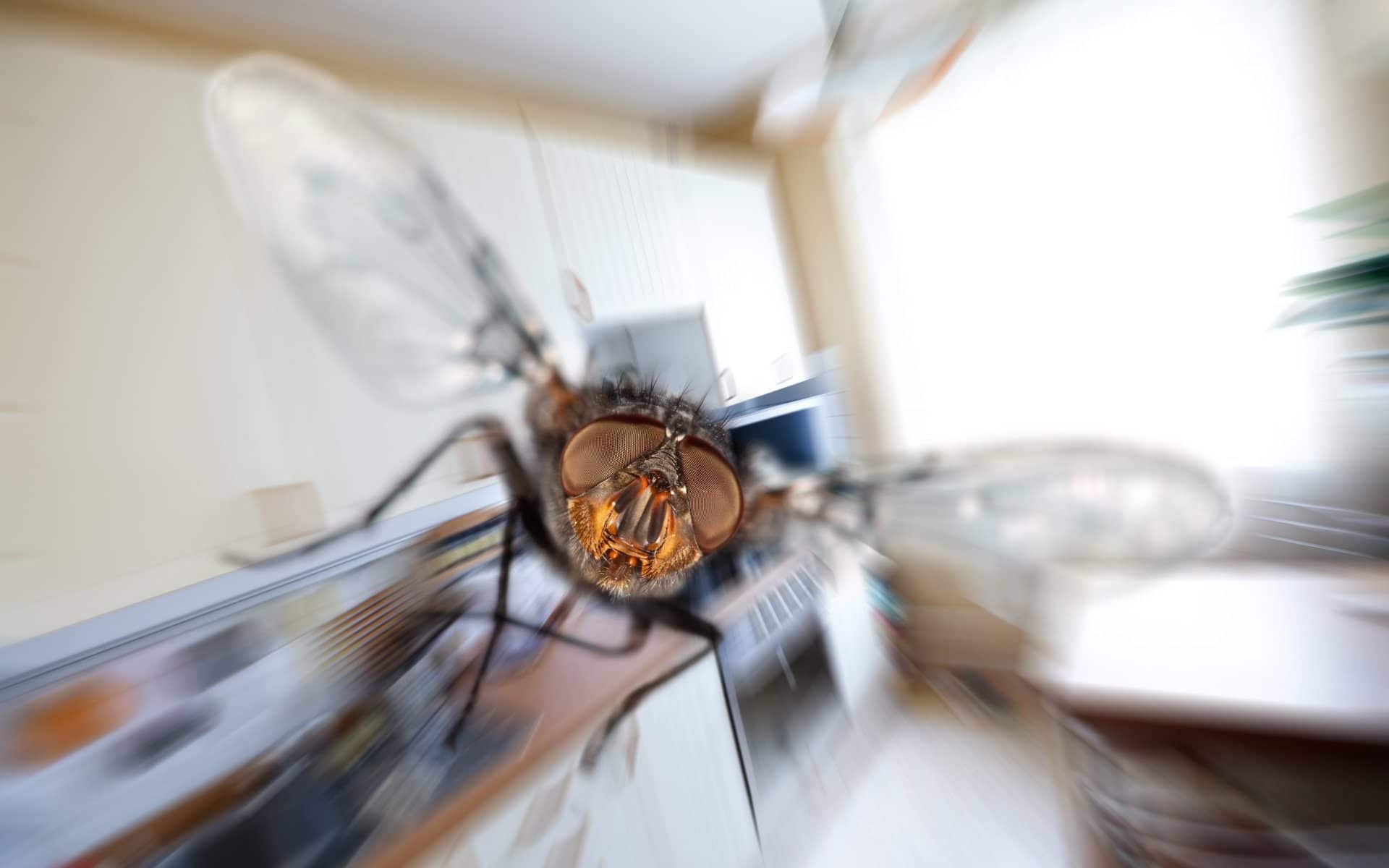
Flies are the worst.

Ew! We detest flies. They hang out on garbage; they breed and lay eggs on dead animals, they ruin picnics and force us to buy fancy covers to keep away the “yuck” factor on outdoor meals.

We here at Environmental Pest Management are here to attack your fly infestation with a few professional tips you can use on your own, as well as when to give us a call. Visit our website today for help with bouncing any critters large or small that crashed your home’s velvet rope.

Flies

Flies are necessary, just not in your home.

Believe it or not, flies do a lot for our ecosystem. They serve as an abundant food source for other animals, and they are the “cleaning crew” of the world. They get rid of dead and rotting flesh, plants, and other organic material.

Fishermen use fly larvae as bait. Tarantula owners use fly larvae as food for their pets. Some companies who “grow” maggots for commercial sale even believe there could be some cancer-fighting benefit to them.

So, even though it’s possible to have a healthy appreciation for flies from a distance, we’re pretty sure you don’t want them in your home, on your food, or buzzing in your ears. Let’s dive into how to keep them where they belong–outside doing their jobs.

Flies have a life cycle, and you can interrupt it.

Even though flies seem to materialize out of thin air and circulate your home, they do come from somewhere. Even in the winter time, you may notice an errant fly or two haplessly zinging around your windows or kitchen.

Here’s the gross part: if there are a lot of flies in your home, it’s because they’ve laid eggs in there. The eggs become larvae (uh, and by that we mean maggots–truth), and the larvae become flies. If you don’t take preventative action to interrupt this cycle, the whole thing begins again.
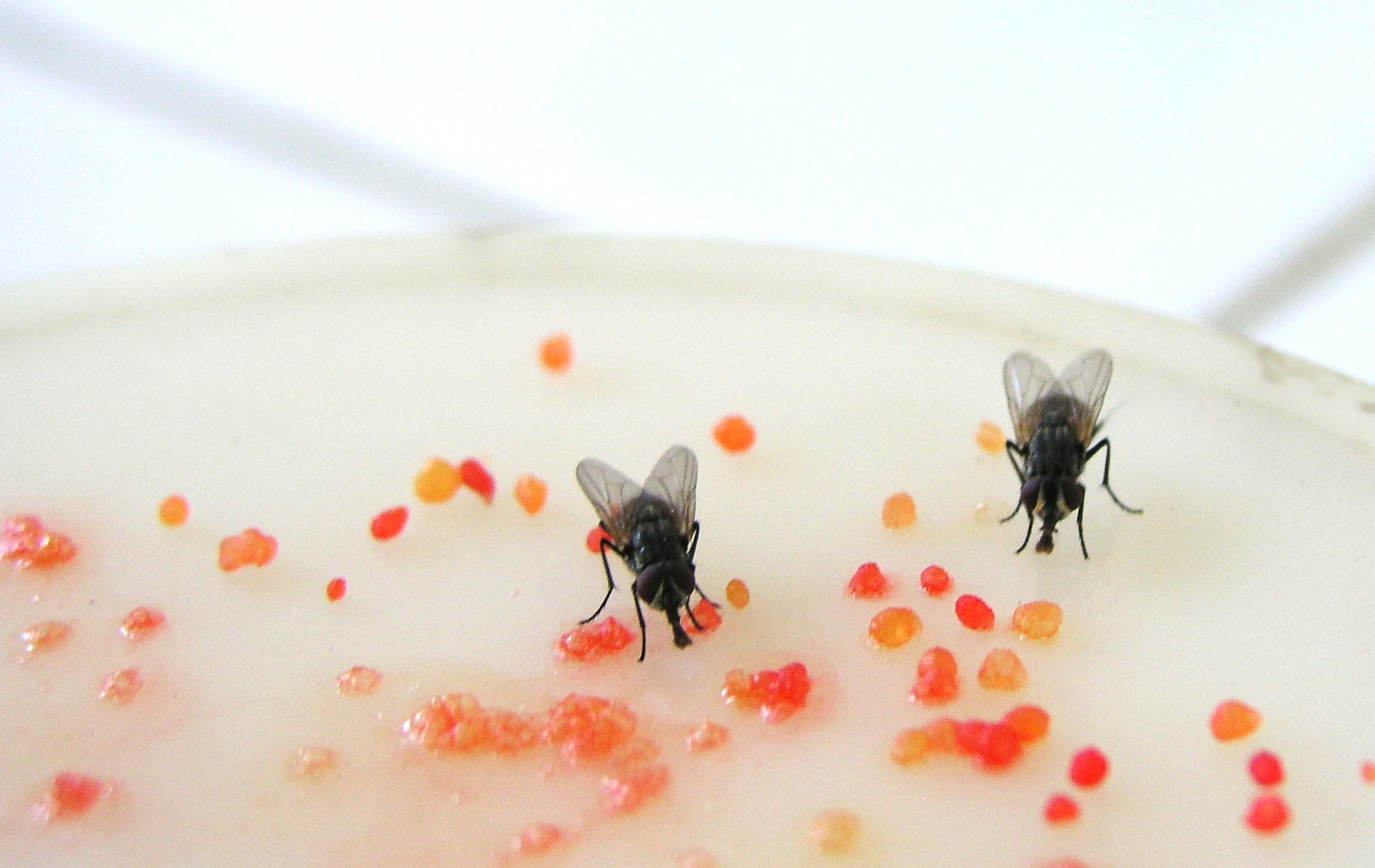
Flies on food

Two kinds of flies. Two types of problems.

The most common types of flies that infest our homes are the house fly and blowflies. Blowflies lay their eggs on dead bodies. For homeowners, this means that if a squirrel or mole or other small animal dies near your home, blowflies will seek it out as prime real estate for their eggs.

Further, if you’ve had a quiet pest or two like a bat or mouse die in your attic or walls unbeknownst to you, any blowflies in the area will inevitably seek out this kind of target for to lay their eggs.

Once laid, the eggs become larvae within hours (hours!), and progress through 3 more stages of growth and molting (shedding their skin) before emerging as flies after 7-14 days. House flies have a similar life cycle but tend to gravitate toward other organic material like garbage, food, or feces on which to lay their eggs. In case you were wondering, houseflies can lay up to 900 eggs at a time and live up to 90 days. That’s a lot of reproduction potential!

Stop the eggs, stop the flies.

You will never be able to thoroughly sanitize your yard or the world around you of dead bodies and garbage. There are, however, a few ways to ensure your home is not a welcoming place for flies to lay their eggs.

Intuitively, you can assume that if you eliminate egg-laying “property” for flies, you can eliminate flies in your home.
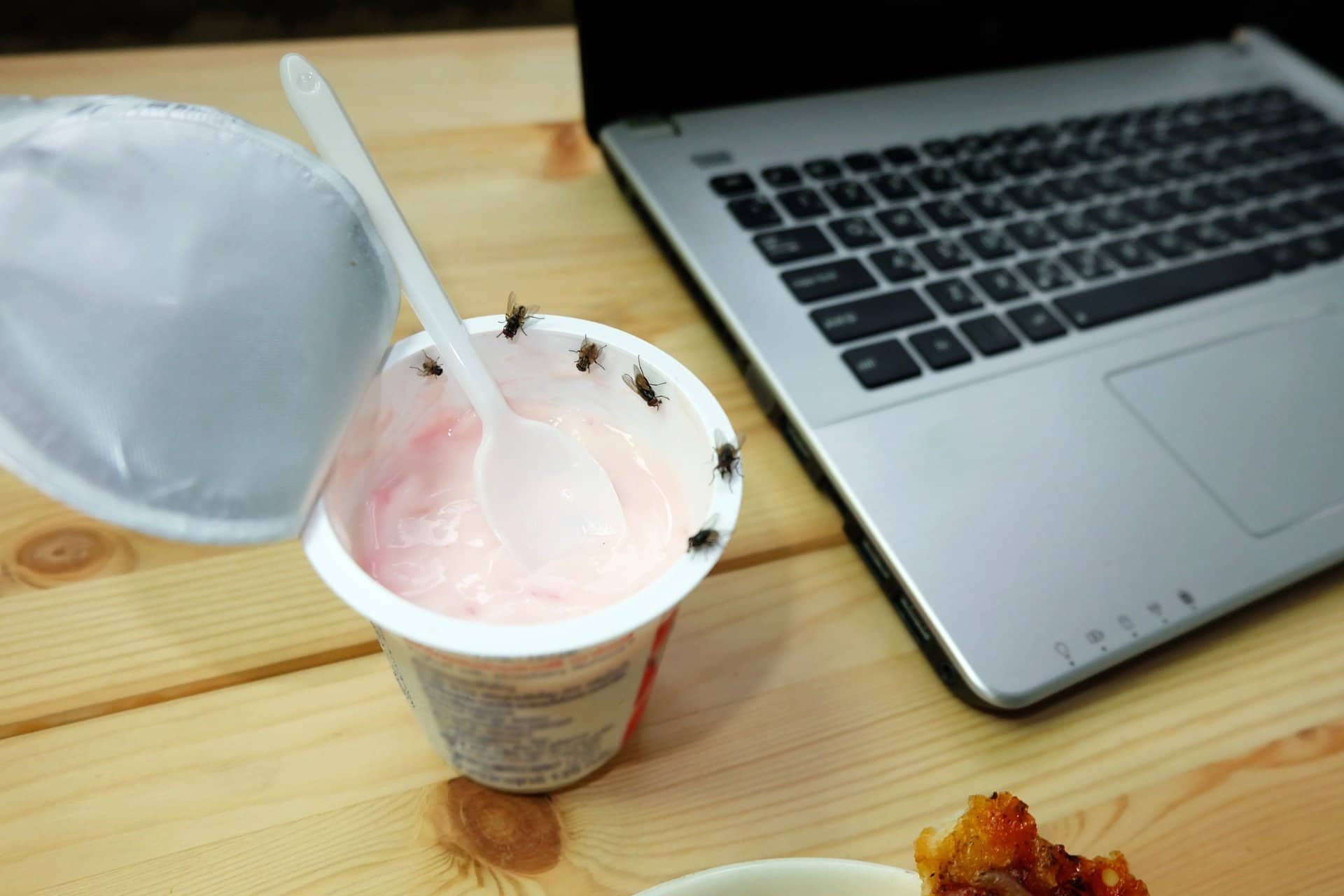
Flies on food

First, have an inspection.

A wise first step in the fight against flies is to have your home inspected by a professional and reliable pest control service: Environmental Pest Management. Even having one mouse or chipmunk making a home out of your insulation and then expiring can create a fly disaster.

We can help uncover any sly vermin who may have breached your home security and are creating a “dead body” problem.

Though we can fix your fly problem at any time or season, we recommend a springtime home evaluation to get a jump on the height of the summer fly hatches.

We do a thorough check of your home’s seams, siding, roof vents, and more to determine any entry points for small mammals. Then, we seal any holes or cracks we find to make sure those furry little guests know they’re not welcome. When your home is pest free, the flies have nowhere to lay their eggs.

Control what you can.

To stop egg laying and fly production, try these tips:

  • Keep garbage lids tightly closed and empty the garbage often, especially if you have food waste
  • If you keep a compost container in your home, be sure to seal it tightly with a lid, and wash it each time you empty it.
  • Scoop cat feces in your litter box every day, and clean the whole box out thoroughly each week
  • Do not leave food out uncovered on your counter, or dirty dishes in the sink.
  • If you add dirty dishes to your dishwasher over a few days before washing, be sure to close the dishwasher door tightly. Also, run your dishwasher more frequently during the hot summer months when flies are at their worst.
  • Walk your yard periodically and check for small dead animals near your home.
  • If you have food in the fridge that needs to be thrown out, consider leaving it covered in the refrigerator until just before your weekly garbage pick-up. Then, do a bulk clean-out of food waste on trash day. This way, your old food is not sitting in the garbage, attracting flies for several days.
  • If possible, get an outdoor trash can with a lid that seals tightly.
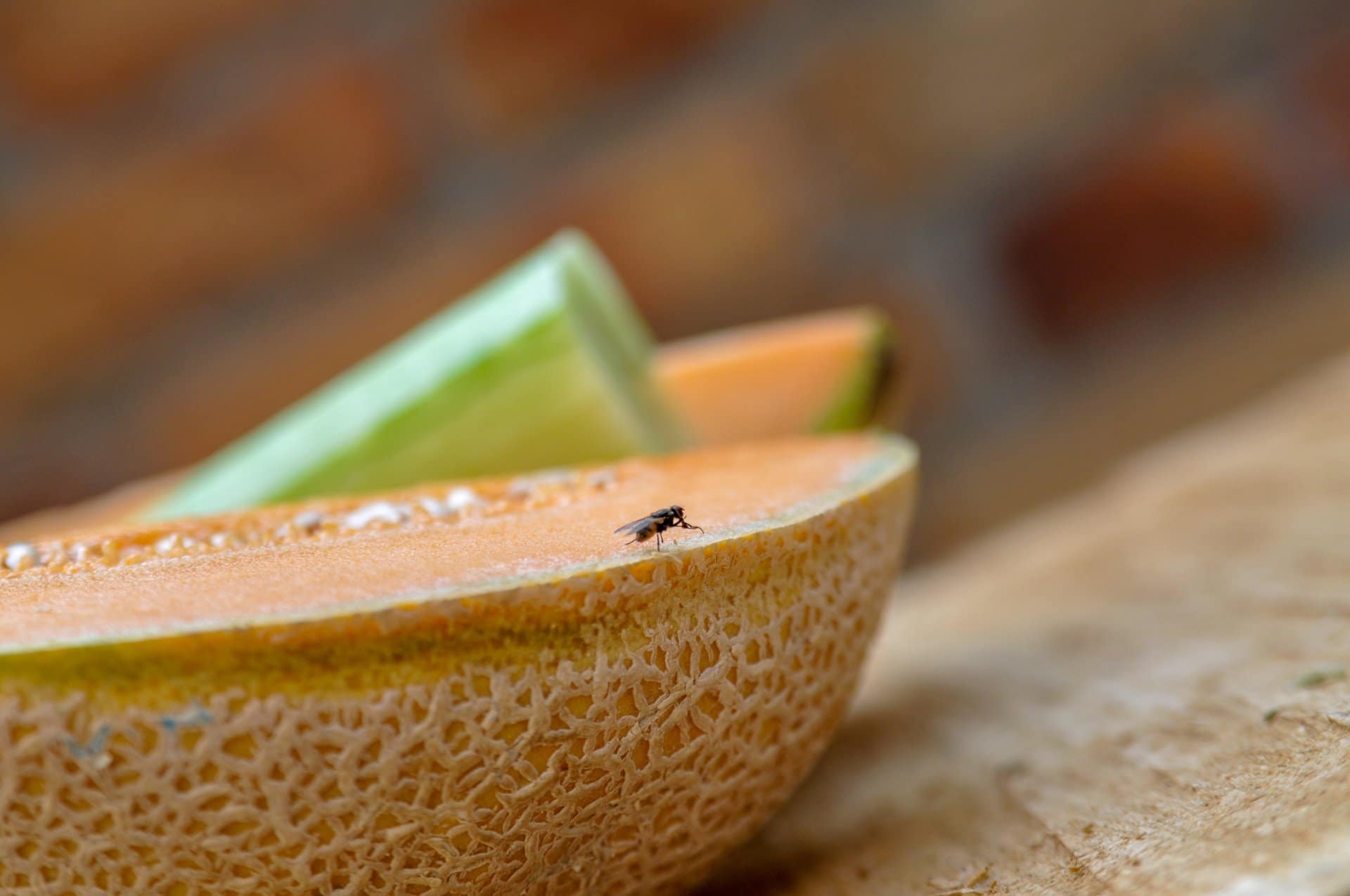
Flies on fruit

Finally, call the professionals at EPM.

When all your preventative steps are still not eradicating the flies in your home, give us a call to schedule a home evaluation and live bug-free with Environmental Pest Management. We use the best products to quell your fly problem and get rid of any remaining pests.

We solve your problems “quickly, safely, and at the most reasonable price.”
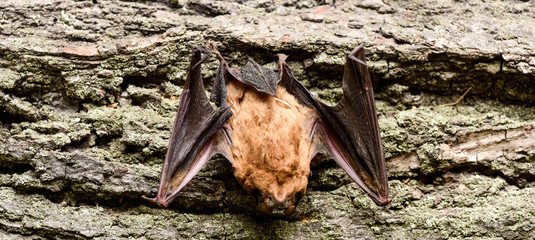
Little Brown Bats and Big Brown Bats: How to Know if You Have a Bat Problem

Bat

Bats are Pretty Cool, as Long as They’re Not Living in Your House Rent-Free

Little Brown Bats and Big Brown Bats play a significant role in our ecosystem here in Minnesota. They eat an excessive amount of insects and often serve as pollinators to some species of plants.

Bats also serve as a vital food source for other predators. Because of their roosting patterns in large numbers, they are an easy catch for other mammals, predatory birds, and snakes.

We can surely all agree that bats at a distance, or even flying around in our neighborhoods at night are a nifty example of nature at work in all her glory. However, if those bats are roosting in your home, apartment complex, or business property, “nature” can get a little too close for comfort.

At Environmental Pest Management, our goal is to help nature do its best work outside of the confines of your home, apartment complex, or business. Call us today to send an eviction notice to your pests and make sure they leave you alone.

There are Two Main Bat Species that May Want to Move in and Set up House in your Home

In Minnesota, two bat species commonly show up as pests in our homes or properties: The little brown bat and the big brown bat.,/p>

The Little brown bat:

A tiny creature that weighs just half an ounce, this bat is prolific and well-traveled. These bats are red or brown colored and have a wingspan of 8-11 inches. Little brown bats are found all over the United States, Canada, and Mexico, but with fewer numbers in the south than in the north.

These little guys “shack up” in the hundreds of thousands, and have day and night roosts, as well as summer homes and winter “hibernation” hide-outs. They favor caves, rocks, trees, woodpiles, and buildings to rest, sleep, or raise their young.

Little brown bats eat mainly insects, so you have them to thank in large part for keeping mosquito and other insect populations from running completely rampant in our neighborhoods and on our rural farms and lakeside “playgrounds.”

You will likely notice bats at the height of their daily feeding frenzy just a few hours after dusk. They must eat at least one half of their body weight in insects each day to survive. Surprisingly, bat mothers must eat at least 100 percent of their body weight each day to live and feed their young.

The Big Brown Bat:

This bat has a coppery sheen to their fur and a wingspan of 12-16 inches. It weighs one-half to just over an ounce and has a different facial structure than the little brown bat. The big brown bat is also exceedingly common, living from the Carribean Islands and northern South America to the north of Canada. They are everywhere in the United States.

Big brown bats eat insects, and their favorite food is beetles. Their teeth are well equipped to break the tough exoskeletons of beetles, but they will also eat flying insects as well. Big brown bats may check out your attic or walls and decide your home or building is a perfect place to hibernate or rest.

These bats are the speed demons of the bat world, achieving flights speeds of 40 miles per hour. They can also live long lives (hopefully not as freeloaders in your space) of up to 20 years. They adapt well to a variety of habitats, including deserts, cities, forests, and mountain ranges, to name a few.

Do you have a bat problem?

Bats and Big Brown Bats

Here are some signs of a bat infestation:

  • Droppings around your attic vents
  • Scratching or squeaking sounds in your walls or attic
  • Seeing bats enter and leave your attic vents at or just after dusk

If you notice these signs of a bat visitor in your home or business, be sure to call us at Environmental Pest Management  immediately. Do not attempt to evict the bats on your own.

Depending on the time of year, you may inadvertently seal a bat into your building because it’s hibernating and you’ve closed the entry point. If the bat is female and raising flightless pups, you may also seal it and the babies into your home if you close entry points at the wrong time.

At EVP, we are well-versed in bat behavior, hibernation, and mating/birthing seasons, and can advise you on the best course of action once you discover you have one or more of these fantastic critters playing house with you.

Even though you surely don’t want these small, furry, somewhat creepy roommates to live with you permanently, the good news is that they are not rodents and will not chew on your walls, roof, or other home materials. They make their way into buildings to hibernate or colonize and raise their young exclusively.

When You are Ready to Evict Your Bats Humanely, Call the Professionals at Enviromental Pest Management

Our primary goal, no matter what pest you need to get rid of, is to provide you with a safe, humane solution for both you and the pest. With bat removal, we want to rid your home of the bat and return it to a habitat where it can keep doing its job uninterrupted–which is removing insects from the air and serving as food to other predators in the food web.

Since every building and every infestation are unique, we travel to your place to have a look at the situation before giving an estimate. Cost of removal depends on the number of bats in your home, the structure of the building, and the approximate length of the infestation.

Once we see what we’re dealing with, our quote will be precise and cost-effective, so you can make a quick decision to end the infestation and get on with your life, and the bats can move to more “natural surroundings” and continue to do what bats do best.

Call us at Environmental Pest Management Today for a free estimate and reclaim your home while sending bats out into their natural habitat so you can enjoy nature where it’s meant to be–outside!

Controlling Pests Without Ruining Your Garden

Snell

Nothing is more frustrating than painstakingly planting a garden of colorful growing things, and then watching your hard work get eaten and destroyed by insects or wild animals.

Luckily, there is a myriad of ways to prevent pests from bugging your plants without ruining your garden. Many of the solutions can be made using ingredients you might already have around the house.

At Environmental Pest Management, we take a common sense and environmentally sensitive approach to managing pests. We strive to prevent and eliminate pests in a way that is affordable for our clients and non-damaging to people, property, and the environment. Call us at 952-432-2221 and schedule your free estimate today!

Identifying Plants and Pests

Not all bugs are created equal. Even in the healthiest garden, there will always be insects munching on leaves. Each gardener decides when their garden needs to get treated with insecticide or another pest repellent, and when it can be left alone to nature.

For new gardeners, a great place to start your pest management study is to learn how to identify what kinds of bugs, slugs, and other critters are common in your region. You can talk to your neighbors to compare notes and gain historical knowledge from the area, in addition to using Google or your local library resources.

If you bought a house with landscaping elements you aren’t familiar with, research and write down the kinds of plants, flowers, and trees you identify. Some pests have specific species of plants they prefer, while others are less picky.

Common Garden Pests

Garden Pests

The list of critters that would love to share your garden is very long. Below is a roundup of some of the most common pests that could potentially cause problems.

  • Ants
  • Animal – birds, cats, deer, rabbits and other rodents
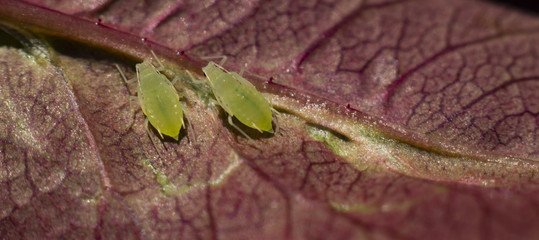
  • Aphids
  • Beetles – asparagus, been, blister, cucumber, flea, potato
  • Earwig
  • European corn borer
  • Grasshopper
  • Fungus Gnats
  • Psyllid
  • Root maggot
  • Slugs
  • Snails
  • Bugs – sow, pill, squash, stink,
  • Spider Mite
  • Squash Bug
  • Worms – army, cut, cabbage, corn, tomato, wire
  • Whitefly

Environmentally-Friendly Pest Management

When treating your garden or lawn, it’s essential to strive for the least toxic solution. Below is a non-exhaustive list of some tried-and-true pest management practices that are effective yet gentle.

Botanical insecticides:

An insecticide is any substance used to kill insects. Botanical insecticides are derived from plants and are less toxic than many chemical alternatives.

Pest traps and lures:

Insect traps use colors, pheromones, scents, food or other bait to lure and capture pests. Most of these solutions contain and kill pests by entrapping them in a sticky, glue-like solution or glass receptacle.

Pest barriers:

A pest barrier can be something as simple as a fence or a strip of copper tape. Some gardens may even benefit from granules of predator urine (coyotes, wolves) to sprinkle around the perimeter of your property and scare prey animals away.

Biopesticides:

Biopesticides are derived from natural sources and are effective at managing pests yet short-lived in the environment. According to the Environmental Protection Agency, biopesticides are derived from materials like plants, bacteria, and minerals. Biopesticides are less toxic than synthetic pesticides and very effective in small quantities, resulting in less environmental pollution.

Beneficial insects:

Believe it or not, there are plenty of bugs that you could purposefully invite to your garden for pest control! Beneficial insects eat aphids, mites and other plant-chomping nuisances that leave your garden in shambles. Typically, this is an aggressive solution that you should consider only after exhausting other options.

Gardening in Minnesota

Gardening in Minnesota

Each climate comes with its own unique set of growing conditions and common pests. At Environmental Pest Management, we are experts at helping Minnesota gardeners and homeowners find solutions for all of their pest management problems.

According to the USDA plant hardiness map, the state of Minnesota contains growing zones from 3a-4b.

The University of Minnesota has an incredibly thorough insect identification tool that contains pictures and descriptions of most of the pests you’ll find in the area.

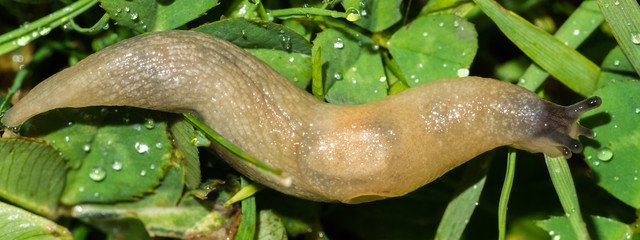
Slugs

The hardy hosta is a favorite among Minnesota gardeners – and slugs, who love to munch holes in the broad green leaves until they look like swiss cheese.

To repel these slimy uninvited guests, you can fill a tuna can with beer or grape juice and the slugs will eventually fall in when they go for a sip.

Alternatively, you can purchase a strip of copper tape that will give slugs and snails a mild electrical shock where the copper meets the wet mucus of their bodies.

Japanese beetle

In the Twin Cities metro area, the Japanese beetle is a widespread nuisance. An invasive species, this beetle loves to feast on peony flowers, raspberry bushes, apple trees, and around 300 other plant species.

To stop beetle larvae from maturing, you can apply a preventative insecticide during the month before adult beetles emerge and begin to lay eggs (usually from mid-June to mid-July).

If that doesn’t work, try a DIY organic pesticide spray with neem oil. Neem oil is derived from Indian neem trees and is an ancient insecticide that can be used to repel aphids, mites and other soft-bodied insects.

DIY Natural Pesticide Spray Recipe:

  • Two tablespoons neem oil
  • One tablespoon castile soap
  • One quart of water

Mix all three ingredients in a spray bottle, shake well, and spray on the tops and undersides of leaves. You may need to apply multiple treatments.

Moles and Voles

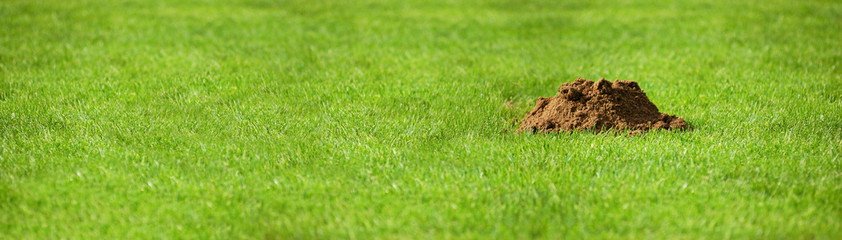
Mole and vole control can be a big challenge, as these burrowing rodents have voracious appetites. Moles prefer to eat insects and worms, while voles feed on the roots of grass and perennial flowers.

If you have a severe mole problem, reducing their food source could alleviate the infestation. Moles especially love beetle grubs, so finding a solution to kill them might entice the moles to find food elsewhere.

For a vole infestation, there is a practical, non-toxic solution that might surprise you: a barn cat! Adopt (or borrow!) a cat that is known to be in touch with its natural predatory instincts and let it loose in your yard for a couple of days.

Removing rodents from your garden is usually the most effective long-term solution. Though some gardeners may resort to lethal traps or poisons, there are a variety of humane live traps that you can buy or even make yourself.

Safe and Effective Pest Management

Don’t let pests bug you – call Environmental Pest Management at 952-432-2221 to schedule your free estimate with one of our trained experts today!

Everything You Need to Know About Larder Beetles

Beetles

If you have ever gone into your kitchen and opened your pantry, or larder, and seen small brownish-black beetles having a picnic, you know what it’s like to have larder beetles in your house. You probably weren’t thrilled about it.

At Environmental Pest Management, our job is to keep your home pest-free. Whether we’re helping to evict unwanted guests or prevent them from arriving in the first place, you can count on us to use the safest, most environmentally friendly products to get the job done.

Unlike some bugs that can invade your home, larder beetles are noticeable because they tend to travel in groups and don’t try to hide. Here’s everything you wanted to know about identifying these insidious insects and encouraging them to take up residence elsewhere

What are Larder Beetles and How Do I Identify Them?

When you’re dealing with pest control, the first step is to identify who you saw scurrying through your pantry. Knowing what type of bug you’re dealing with lets you know what techniques or products will be useful in dealing with them.

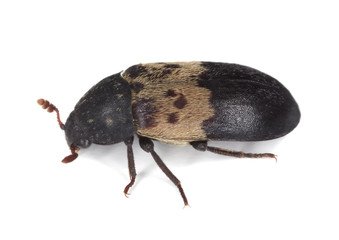
Larder beetles get their names from the place they are often found – in your larder – which is an old word for your pantry or cupboard, where you store food, especially grains and meat. They are small in size, only about ¼”  to ⅓” long, and oval-shaped. Look for the brown band around the midsection of their black body. It’s the primary identifying characteristic of a larder beetle.

Of course, larder beetles have six legs like all insects and two jointed antennae. The brown band typically has yellow or black spots on it, and tiny, densely packed hairs cover the larder beetle’s stomach.

Larder beetle larvae are about ½” long and do not have the characteristic beetle shape yet, and look more like a sow bug except that the bands on its body are striped brown and black. Like the adult larder beetle’s stomach, larder larvae have short yellowish hairs on their bodies.

Why are Black Larder Beetles in My House?

Larder beetles and their larvae are hungry. When we say that they are omnivores, we really mean they will eat anything. Stored food such as cereals, oatmeal, cookies, bread, dried pet food, stored cured meats, tobacco, carpet fibers, dried fish, cheese, clothing, dried museum specimens, and the carcasses of other bugs. They’re in your pantry or garage because of one thing: access to food.

If you’ve had another pest infestation problem, such as stink bugs or boxelder bugs, sow bugs, or ants, or rodents such as mice, moles, or bats, and there are carcasses in your attic or walls, then larder beetles are going to love your home. Even if you don’t know about the dead bugs in your attic, the larder beetle knows and will tell their friends.

Larder beetles can bore through wood and drywall to get to your food, so not only are they unsanitary, but they are also destructive. They can even bore into tin and lead, to lay their eggs in your canned tuna or black beans.

In the winter, larder beetles often hide in crevices or other sheltered places.

They may even lurk in your walls or garage. In spring, they emerge, looking for a place to lay their eggs. There will be dead bugs or other food sources in your home, so in they come. Females will lay around 100 eggs, which hatch in just a few days, eat consistently, and reach maturity in about six weeks.

Signs of Black Larder Beetles in Your House

wood

Aside from seeing the bugs or their larvae themselves, other signs of a larder beetle infestation include:

  • Holes bored into your boxes, bags of pet food, or other food storage containers
  • Larvae burrowed into a melon, potatoes, onions, or another food source
  • Skins from when the beetles molt
  • Spilled or scattered food — they aren’t precisely fastidious eaters

Strategies for Dealing With These Pests

Larder Beetles

If you’ve got larder beetles in your home, you need to do some severe sanitation to get rid of them. Merely removing the items containing beetles and wiping down your kitchen isn’t going to do the trick. Here are some steps to take to deal with a larder beetle infestation.

  • Everything in your cupboard or pantry must come out.
  • Throw out all food infested with larder beetles.
  • Throw out any opened food containers in your pantry, even if you don’t see signs of the beetles. That includes bags or canisters of flour, cereal boxes, partial pasta boxes, etc.
  • Inspect all canned food items for signs of entry.
  • Change your food storage containers to hard (BPA) plastic or glass, which larder beetles cannot enter.
  • Wipe down all shelves and the pantry floor with a solution containing vinegar or bleach.
  • Thoroughly vacuum all cracks and crevices
  • Look for cracks or holes in the walls, baseboard trim, or other areas where the beetles could have entered. Use a caulk gun to seal these and keep the beetles away.
  • Throw out partial bags of pet food. Store in a hard plastic container with a tight lid.
  • Check behind stoves and other appliances, which may harbor treats and secret passages for larder beetles. Clean this area and seal any gaps.
  • Seal any gaps in doors and windows that could allow entry to larder beetles or other pests.
  • Line the edge of your pantry walls or cabinet backs with diatomaceous earth to help deter and kill any larder beetles (or other bugs) who dare to return.

Contact Environmental Pest Management for Help

Larder beetles can be tricky to get rid of, just because they are so persistent. At Environmental Pest Management, we’ve dealt with larder beetle infestations before so that we can put your mind at ease.

We have a toolbox full of strategies to ensure the pest goes out and don’t come back. We’ll always use the least invasive and safest products and procedures to keep your family and pets free from harm while still eradicating pests and preventing them from returning.

Give us a call today, and we can help make larder beetles a thing of the past, just like the word larder.

Everything You Need to Know About Roly-Poly Bugs

Bugs

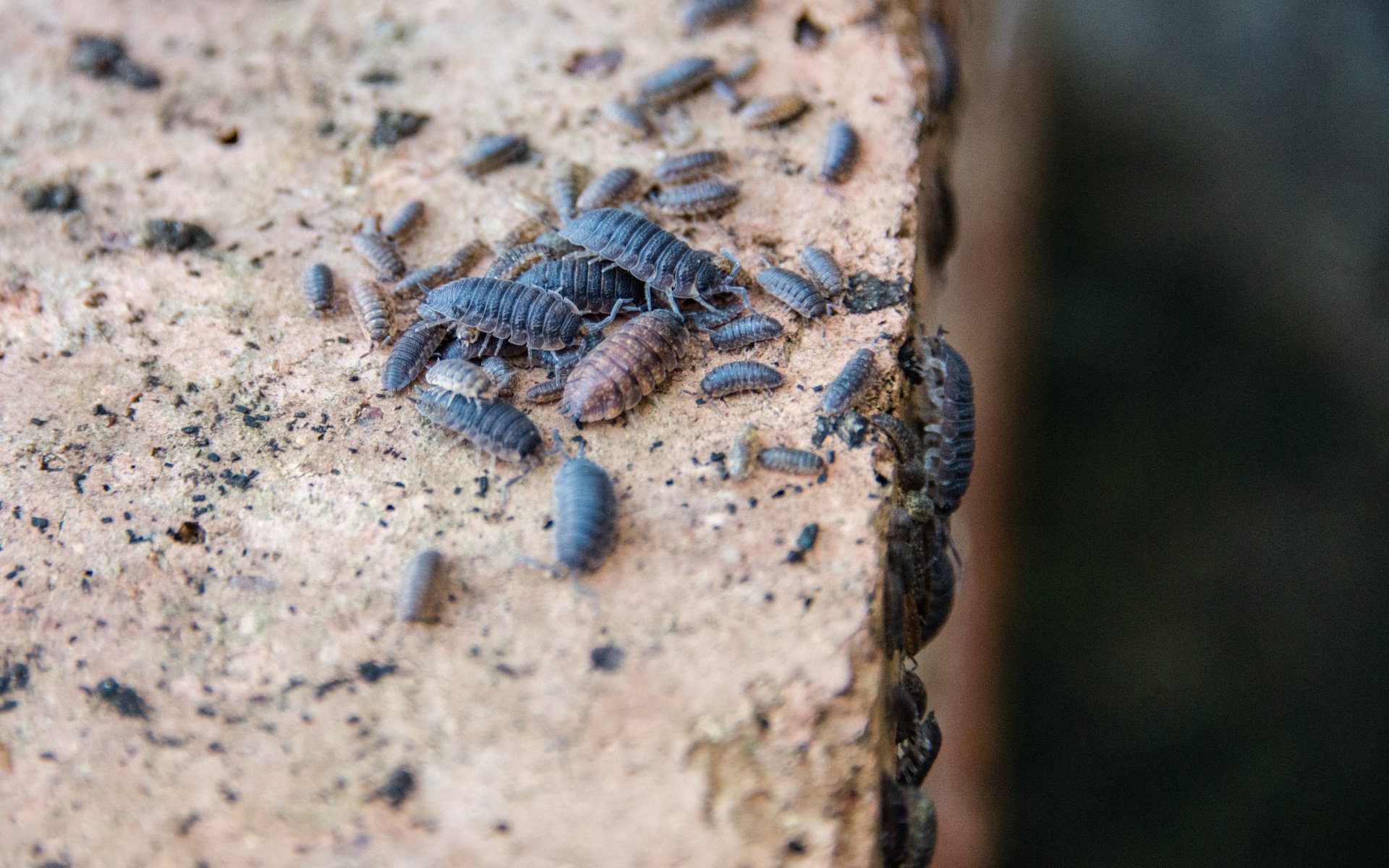
As the weather begins to get warmer, roly-poly bugs start to come out of hiding. The warm weather is the perfect time for them to start breeding, which makes even more bugs.

If you’ve been working in your yard, garage, or basement and have discovered a pile of creepy-crawlies reminiscent of the bug-slurping scene in “The Lion King,” then you probably have stumbled upon a family of pill bugs.

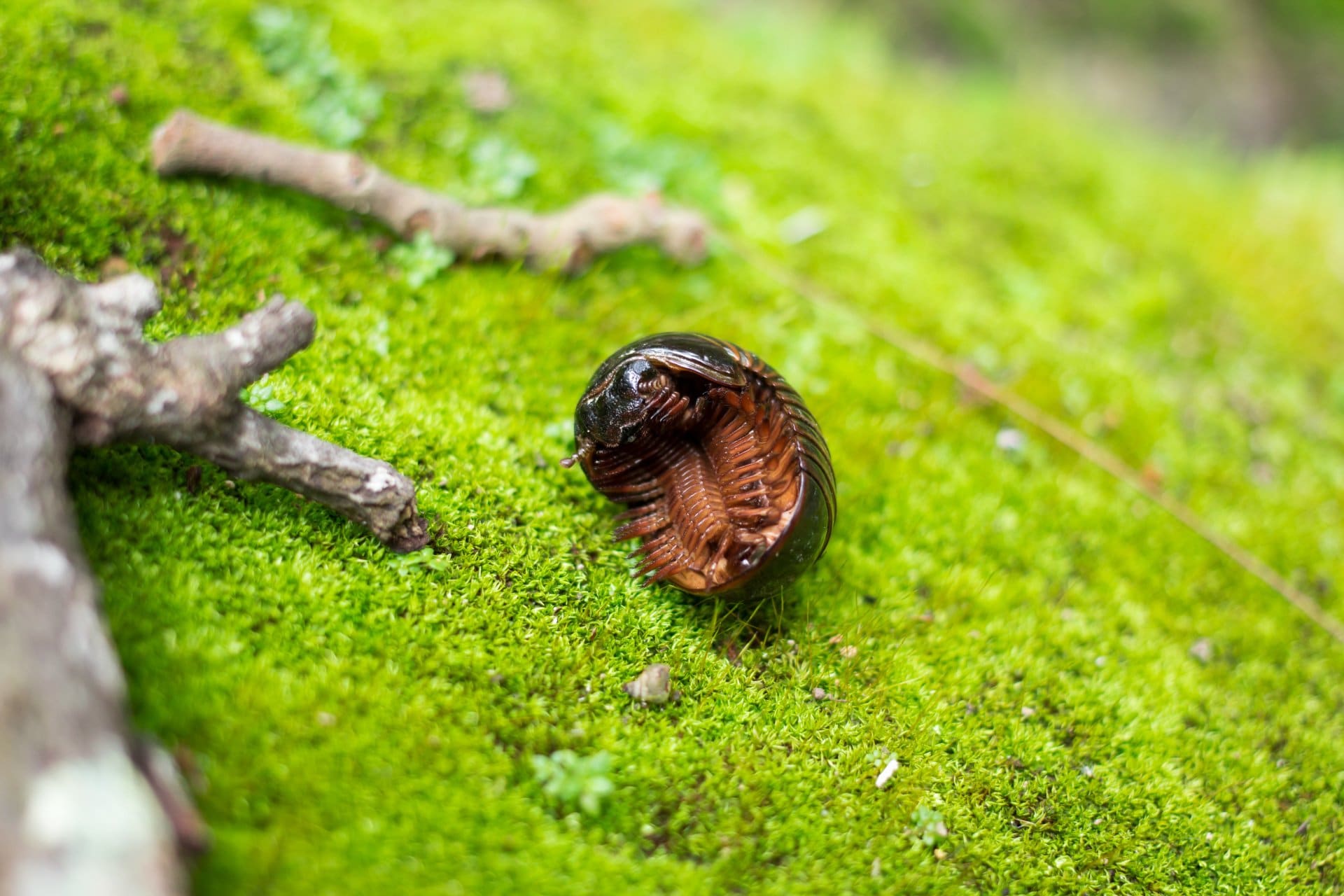
A Roly-Poly Bug rolling into a ball

If you’ve come across new and unusual insects or other pests in your home, contact Environmental Pest Management for advice and assistance in treating them. We’re your friend for dealing with unwanted insects, arachnids, rodents, and other pests. Whether you have pill bugs or sow bugs—or any different kind of critter that belongs outside, we can identify the problem and implement a solution.

Pill bugs and sowbugs are quite fascinating and can serve as a proper science lesson for your kids or satisfy your curiosity. Check out these facts while you’re dealing with evicting your roly-poly family.

What is a Pill Bug?

Armadillidiidae (the scientific name for pill bugs) have so many different names to choose from. For instance:

  • Armadillo Bugs
  • Doodle Bugs
  • Wood Lice
  • Potato Bugs
  • Roly-polies
  • Wood shrimp

These isopods are found across the U.S., typically in moist areas and around some decaying plant matter. 

They are about ¾-inch long, oval-shaped, and with an armor-like shell. Their shell has seven hard plates, similar to a crayfish. 

Although they are called a bug, they aren’t an insect at all. Pill bugs, and their cousins, the sowbug, are land-dwelling (terrestrial) crustaceans more similar to a lobster than an ant. They are purplish-gray and have seven pairs of legs as well as two jointed antennae. Pill bugs get their nickname of “roly-poly” because of the way they curl up into a ball when startled or disturbed.

A roly-poly bug curling into a ball to protect itself.

What is the Difference between a Pill Bug and a Sowbug?

Many people confuse sow bugs and pill bugs since they look similar at first glance. Sowbugs are slightly smaller than pill bugs and have two small tail-like structures protruded from their back end that pill bugs lack. Sowbugs also cannot roll into a ball as a roly-poly can. Both enjoy similar diets and habits, so you might have one, the other, or both.

Also Read: Secret Bug Breeding Grounds in Your Home This Winter

Where Do Roly-Poly Bugs Live?

Pill bugs are tiny scavengers who eat decaying plant material. They will also eat living plants and can damage the roots of your flowers or vegetables. You will most often find them hiding under logs, leaf piles, stepping stones, landscape timbers, rocks, trash cans, garden debris, flower pots, mulch, compost, or other dark, damp areas. You may also find roly-polies in your storage building, basement, shed, or garage.

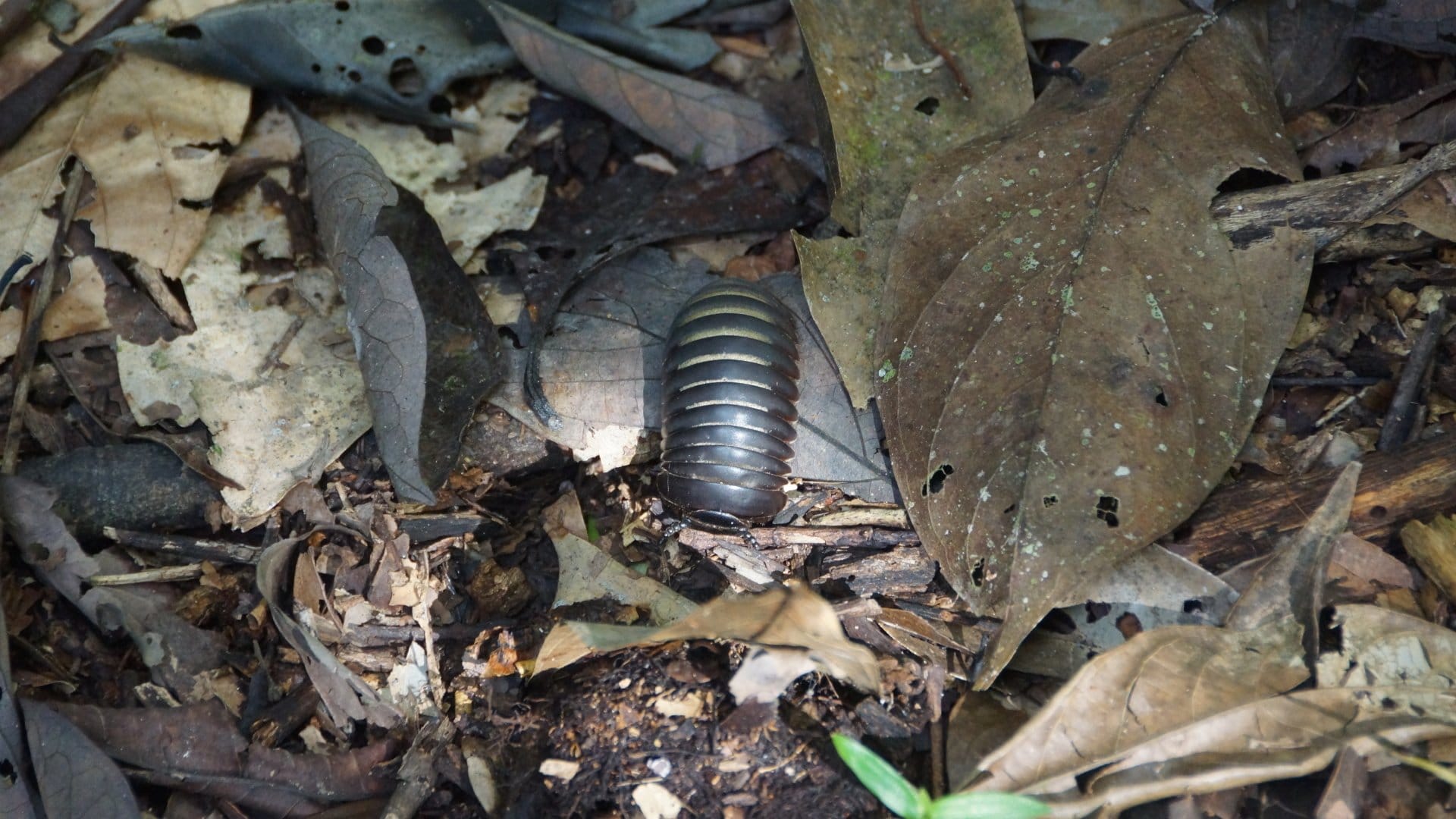
Roly-poly bugs’ bodies do not hold water, which is why they need a moist environment. They typically stay hidden during the day and are more active at night. If you turn over a rock or log and uncover roly-polies, they will usually form a circle to protect themselves and not move until you go away. They prefer to be left alone, but you may prefer for them to be somewhere besides in or around your home.

Roly-polies a little prehistoric-looking and creepy, but they pose no harm to you, your family, or your pets. Pill bugs don’t carry any diseases, nor do they sting or bite. They rarely live long after coming indoors because it’s too dry for them. However, if they can find a nice moist corner of your basement or a leaking pipe that provides them with a water source, they may decide to take up residence and even raise a family.

A Roly-Poly Bug or Sow bug in a pile of decaying leaves

Why are Pill Bugs In and Around My Home?

If pill bugs are in your home, it’s likely because they are already rampant around your home’s foundation. They’ve found their way inside via cracks in your walls, your doors, windows, or ill-fitting screens. They’re most common in damp basements and first-floor bathrooms.

If your yard has excessive moisture or your gutters and downspouts drain close to your foundation, you could be making a haven for pill bugs. If your outside population is large, some enterprising rolly-pollies may seek out the inside of your home for an additional food source and shelter. Additionally, heavy rains can drive pill bugs inside your home to protect them from the pelting rain and the flooding of their common areas.

Also Read: Good Bugs for Your Garden

How Do I Get Rid of Roly-Polies

Pill bugs crave moisture. To get rid of pill bugs, you’ll have to address how your home and yard are hospitable to them. Reducing moisture around your home will send pill bugs packing.

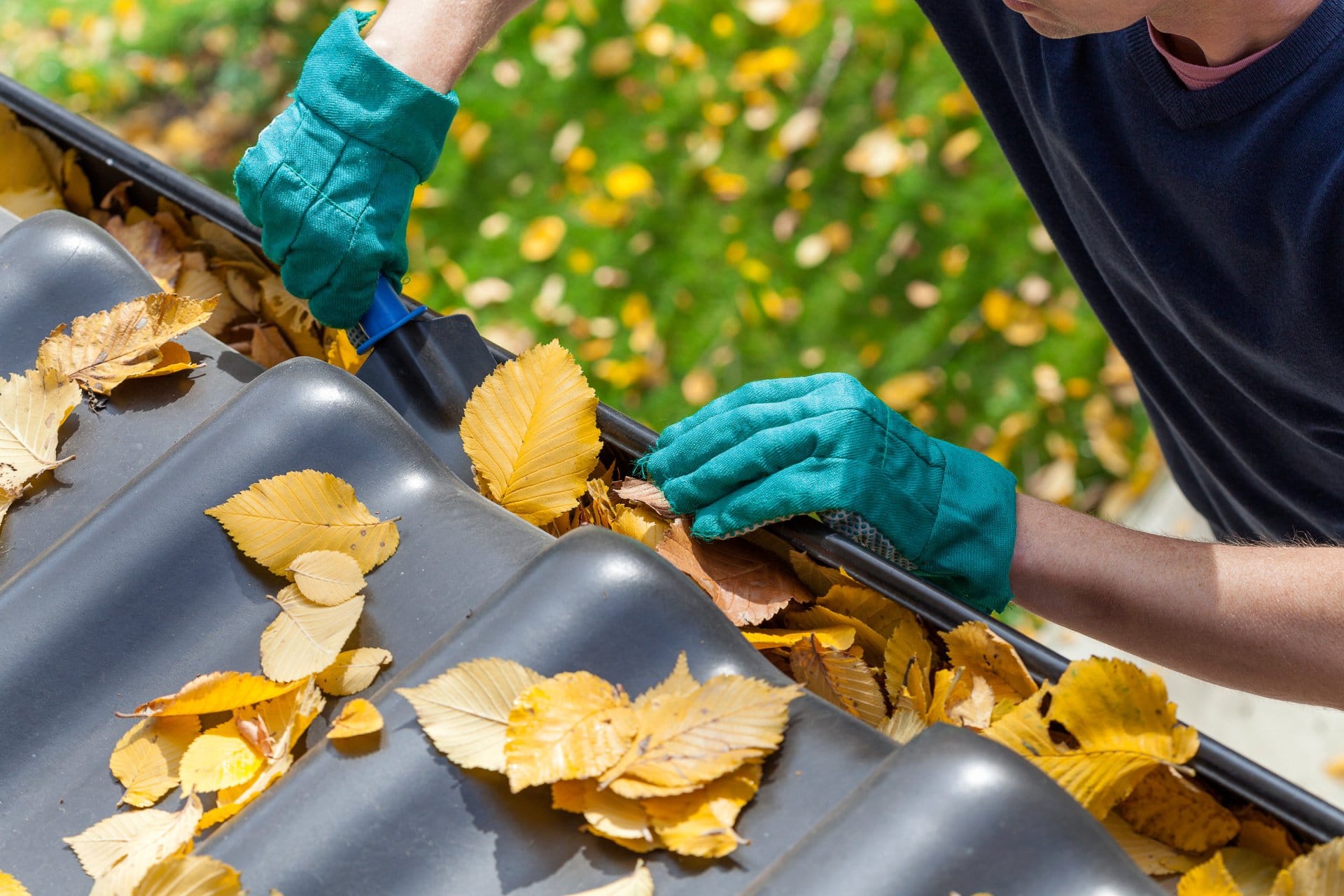
  • Check Your Gutters: Are they blocked or clogged? Leaf debris in your gutters is a haven for roly-polies.
  • Check Your Downspouts: If your downspouts dump their contents close to your home’s foundation, you’ll be making a nice moist area for pill bugs to prosper. Consider extending your downspout or adding a splash block to divert the water farther from your foundation.
  • Consider a dehumidifier: If your basement is chronically damp, a dehumidifier will help reduce the likelihood of mold and mildew as well as make your basement less hospitable to roly-polies.
  • Watch your wood piles: If you keep firewood near your house, it makes an ideal home for pill bugs. Create a frame for your wood to keep it off the ground and refrain from stacking against your home.
  • Maintain your mulch: Keep your landscape mulch 6-12″ away from your foundation to keep pill bugs from finding their way into your home.
  • Lure them out with half of a cantaloupe or a hollowed-out potato. The pill bugs will be attracted to the moisture and get inside. You can then put them in the woods away from your home.
  • Sprinkle diatomaceous earth around your flower pots or in the area where you just found pill bugs. It will dry them out and kill them.

Someone cleaning bright yellow leaves out of a gutter to deter Roly-Poly Bugs

Environmental Pest Management Knows Pill Bugs and More

If you’d rather have someone else deal with your pill bug problem, give us a call at Environmental Pest Management. Our team will be out to inspect, plan, and execute your unwanted creepy critters. We use eco-friendly methods whenever possible to trust that you and your family and pets will be safe. Schedule an appointment today.