

If you’ve spotted droppings in a drawer, heard scratching in the wall at night, or caught a blur racing across the floor, speed matters. Mice don’t stay a “small problem” for long. They contaminate food, damage insulation and wiring, and multiply fast once they settle in.
The good news: you can take smart first steps right away. In this guide, you’ll learn how to confirm you’re dealing with mice, find likely mouse entry points, set traps effectively, remove food and water sources, and clean up safely. You’ll also learn the common mistakes that let infestations continue, and when fast DIY action may work versus when professional rodent control is the better move.
Confirm That Mice Are The Problem
Before you buy traps or start sealing holes, make sure mice are actually the issue. That sounds obvious, but homeowners often confuse mice with rats, squirrels, or even insect activity. Correct identification helps you choose the right control method and move faster.
Common Mouse Infestation Signs To Look For
The most common mouse infestation signs include:
- Droppings: Small, dark, rice-shaped pellets, usually found in cabinets, along baseboards, under sinks, or near food storage.
- Gnaw marks: Mice chew cardboard, drywall, food packaging, plastic, and sometimes wiring.
- Scratching sounds: Often heard at night inside walls, ceilings, or under floors.
- Grease marks: Repeated travel along walls can leave dark smudges.
- Nests: Shredded paper, insulation, fabric, or dried plant material tucked into hidden spaces.
- Musky odor: A stale ammonia-like smell can build up when activity is ongoing.
If you’re seeing fresh droppings every day, that usually means active mice in house, not an old problem that already resolved itself.
Where Mice Usually Hide In A House
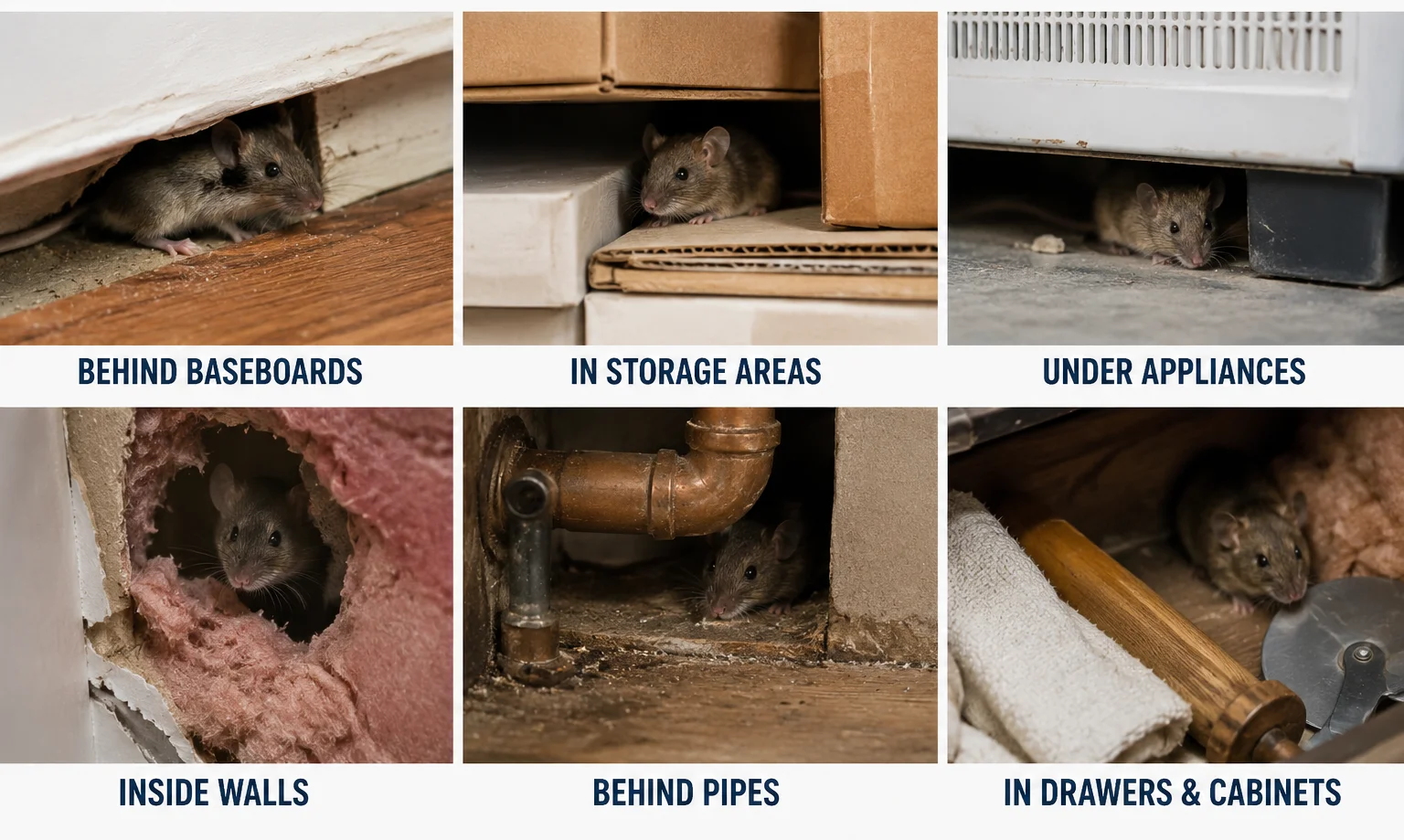
Mice prefer quiet, dark, protected areas close to food and water. Start checking these spots first:
- Behind the stove and refrigerator
- Under sinks and dishwashers
- Inside pantries and lower cabinets
- In basements and crawl spaces
- Around water heaters and laundry areas
- In attics, especially near insulation
- Inside garages and storage rooms
A helpful rule: mice usually travel along edges, not across open rooms. Look along walls, behind stored items, and around utility lines. That’s where you’ll often find droppings, rub marks, and nesting material first.
Find And Seal Mouse Entry Points
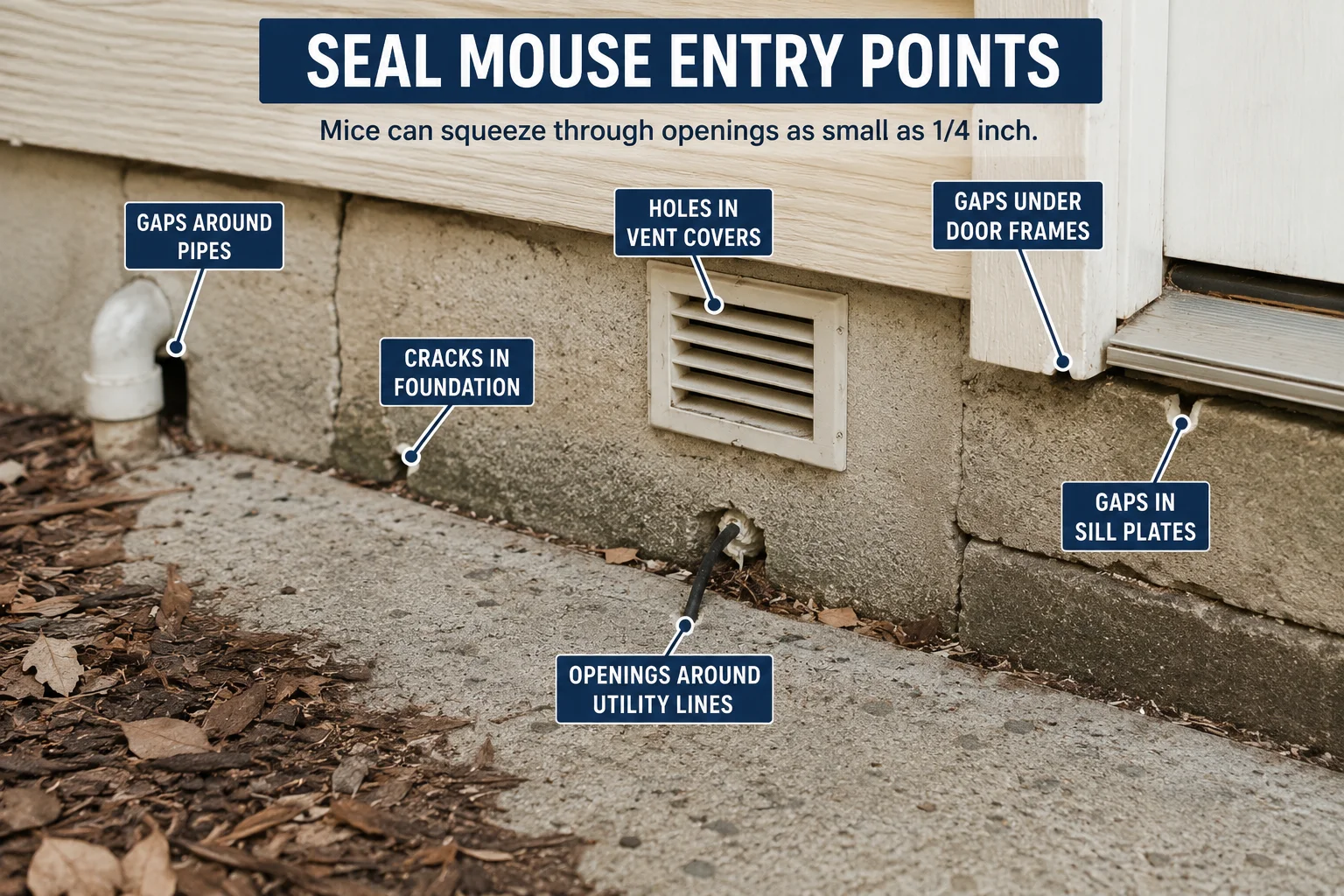
If you only trap mice without blocking access, new ones can keep coming in. Sealing mouse entry points is one of the fastest ways to stop the cycle.
How To Check Doors, Vents, Pipes, And Foundation Gaps
Mice can squeeze through openings as small as about 1/4 inch. That means tiny gaps matter.
Inspect these areas carefully:
- Exterior doors: Check worn weather stripping and gaps at the threshold.
- Utility penetrations: Look where pipes, cables, gas lines, and AC lines enter the home.
- Dryer vents and exhaust vents: Make sure covers fit tightly and screens aren’t damaged.
- Foundation cracks: Small openings near the base of the house can become entry routes.
- Garage doors: Side and bottom gaps are common trouble spots.
- Roofline and attic vents: Especially important if you hear activity above the ceiling.
Use a flashlight and inspect both outside and inside. If daylight shows through, that opening deserves attention.
Best Materials To Block Mouse Entry Points
Not every sealant works. Mice can chew through many soft materials, including standard expanding foam by itself.
Use durable materials such as:
- Steel wool plus sealant: Good for small gaps around pipes when combined with caulk.
- Copper mesh: A longer-lasting option that resists rust.
- Hardware cloth or metal flashing: Best for larger openings and vent protection.
- Cement or mortar patch: Useful for foundation gaps and masonry cracks.
- Heavy-duty weather stripping and door sweeps: Essential around exterior and garage doors.
Common mistake: stuffing a hole with steel wool alone and calling it done. It may slow mice down, but pairing metal mesh with a proper seal gives you a much better result.
Set The Right Traps In The Right Places
When you need fast results, trap choice and placement matter more than buying the biggest variety pack at the hardware store. Poor placement is one of the main reasons people think traps “don’t work.”
Snap Traps Vs. Live Traps Vs. Electronic Traps
Each type has pros and trade-offs:
- Snap traps: Usually the fastest and most practical option for most homes. They’re affordable, effective, and easy to monitor.
- Live traps: These catch mice without killing them, but they’re often less efficient indoors and require frequent checking. Releasing mice nearby can also send the problem right back to your property.
- Electronic traps: These can be effective and enclosed, which some homeowners prefer, but they cost more and need batteries.
If your goal is how to get rid of mice quickly, snap traps are often the best starting point.
Where To Place Traps For Faster Results
Place traps where mice already travel:
- Along baseboards
- Behind appliances
- Inside cabinets with droppings
- Near pantry walls
- In basements along perimeter walls
- In attics near visible activity
Set traps perpendicular to the wall with the trigger end facing the wall. That matches how mice move and increases catch rates.
A few practical rules:
- Use multiple traps, not just one or two.
- Space them a few feet apart in active areas.
- Avoid placing traps in the middle of open floors.
- Keep traps away from children and pets.
Common mistake: catching one mouse and assuming you’re done. If signs continue, keep trapping until activity stops and no fresh droppings appear.
Choose Bait That Works Quickly
Good bait helps, but bait alone won’t fix a mouse problem. Think of it as a way to improve trap performance, not a substitute for sealing and sanitation.
Best Baits For Mice In House
The best baits are small, fragrant, and easy to secure to the trigger. Good options include:
- Peanut butter
- Chocolate spread
- Oats mixed with peanut butter
- Small bits of soft pet food
- Hazelnut spread or similar sweet, oily foods
Even though the cartoon myth, cheese usually isn’t the top performer.
If mice seem trap-shy, try switching bait types or using a tiny bit of nesting material like cotton string near active nesting zones.
How Much Bait To Use And When To Replace It
Use a very small amount, about pea-sized or less. Too much bait lets mice steal it without triggering the trap.
Replace bait when:
- It dries out
- It gets dusty or dirty
- You’ve had repeated misses
- A trap has been sitting untouched for several days in an active zone
Check traps daily. Fast action means regular monitoring. It also helps you judge whether your trap placement is working or needs adjusting.
Remove What Attracts Mice
Even the best traps won’t solve much if your home still offers easy food, water, and shelter. Mice stay where survival is simple.
Food, Water, And Clutter Problems To Fix First
Start with the biggest attractants:
- Store dry goods in hard containers, not paper or thin plastic bags.
- Clean crumbs under appliances and along cabinet edges.
- Don’t leave pet food out overnight.
- Fix leaking pipes and dripping faucets.
- Empty trash regularly and use tight-fitting lids.
- Reduce clutter, especially cardboard boxes, paper piles, and fabric stacks.
This is where fast DIY action can really help. If the problem is new and limited to one area, removing food and shelter immediately can make traps far more effective.
Room-By-Room Rodent Control Tips
Here are practical rodent control tips by area:
Kitchen
- Wipe counters nightly
- Vacuum under stove and fridge
- Store pantry items in sealed bins
Bathroom/Laundry
- Repair leaks
- Keep cabinets dry
- Don’t let lint and clutter build up behind machines
Basement/Crawl Space
- Move stored items off the floor
- Use sealed plastic totes instead of cardboard
- Check for moisture and foundation gaps
Garage
- Store birdseed, grass seed, and pet food in metal or thick plastic containers
- Sweep debris regularly
- Seal the garage door edges
Common mistake: focusing only on the room where you saw a mouse. Mice use the whole structure, especially hidden travel routes between kitchens, utility spaces, garages, and basements.
Clean Up Mice Safely After Trapping
Cleanup matters as much as trapping. Droppings, urine, and nesting materials can contaminate surfaces and keep odors in place, which may attract more rodent activity.
How To Handle Droppings, Urine, And Nesting Material
Don’t sweep or vacuum dry droppings first. That can stir particles into the air.
Instead:
- Ventilate the area for at least 30 minutes if possible.
- Spray droppings and nesting material with disinfectant or a bleach solution appropriate for the surface.
- Let it soak for several minutes.
- Wipe up with paper towels.
- Place waste in a sealed bag and dispose of it.
- Disinfect the area again afterward.
For dead mice in traps, wear gloves, bag the mouse securely, and disinfect the trap before resetting or disposing of it.
When To Wear Gloves, A Mask, And Disinfect Surfaces
Wear gloves for any cleanup involving droppings, urine, nests, or dead mice. A mask is a smart choice when cleaning enclosed or dusty areas such as attics, basements, garages, or cabinets with heavy contamination.
Disinfect:
- Shelves and drawers with droppings
- Countertops and pantry areas
- Floors near active routes
- Any trap location after a catch
If contamination is widespread, or you’re dealing with a lot of nesting material in insulation or wall voids, that’s a sign DIY cleanup may not be enough.
Know When To Call A Professional
Sometimes quick homeowner action helps. Sometimes it only delays the real fix. If activity is ongoing or widespread, professional rodent control is often the faster and more complete solution.
Signs The Mouse Problem Is Bigger Than You Can Handle
Call for help if:
- You keep seeing fresh droppings after trapping and sealing
- You hear mice in multiple walls, ceilings, or floors
- There’s a strong odor or repeated sightings during the day
- You’ve found several nests
- The infestation involves attic insulation, crawl spaces, or hard-to-reach voids
- You suspect wiring damage or contamination in HVAC areas
Daytime sightings often suggest heavier activity, because mice usually avoid open movement when populations are low.
What To Expect From A Pest Control Visit
A professional visit typically includes:
- A full inspection of interior and exterior access points
- Identification of nesting zones and travel paths
- A trap or baiting plan based on the home layout
- Recommendations for exclusion repairs and sanitation
- Follow-up visits if activity is established
Professional help is usually the better option when you’re not just dealing with one mouse, but a recurring infestation that keeps outpacing your DIY efforts.
Prevent Mice From Coming Back
Once the immediate problem is under control, prevention keeps you from starting over a month from now. Mice return when small vulnerabilities stay in place.
Simple Weekly Habits That Help Keep Mice Out
Build a short routine:
- Check under sinks for leaks
- Wipe pantry shelves and kitchen corners
- Vacuum behind appliances when possible
- Inspect door sweeps and weather stripping
- Watch for new droppings in garages, basements, and cabinets
- Keep pet food and birdseed sealed
These small checks catch issues before they become another infestation.
Seasonal Rodent Control Tips For Long-Term Prevention
Mice often push indoors when outdoor conditions become less favorable, especially in fall and winter.
Use these seasonal habits:
- Fall: Inspect the home exterior carefully and seal new gaps before temperatures drop.
- Winter: Monitor garages, basements, attics, and storage areas more often.
- Spring: Clean cluttered areas and check for damage from winter moisture or shifting materials.
- Summer: Trim vegetation away from the house and keep outdoor food sources controlled.
Long-term prevention is really a combination of exclusion, sanitation, and monitoring. Miss one, and mice may find their way back.
Conclusion: Get Rid Of Mice Fast And Keep Your Home Protected
If you want to know how to get rid of mice in house fast, focus on the basics in the right order: confirm activity, seal entry points, set traps where mice actually travel, remove food and water sources, and clean up safely. Those steps can work well when the problem is caught early.
But if you still see fresh signs, hear movement in multiple areas, or suspect a larger infestation, don’t wait too long to bring in professional rodent control. Fast action is what matters most. The sooner you stop access, reduce attractants, and deal with active mice, the easier it is to protect your home for the long term.