
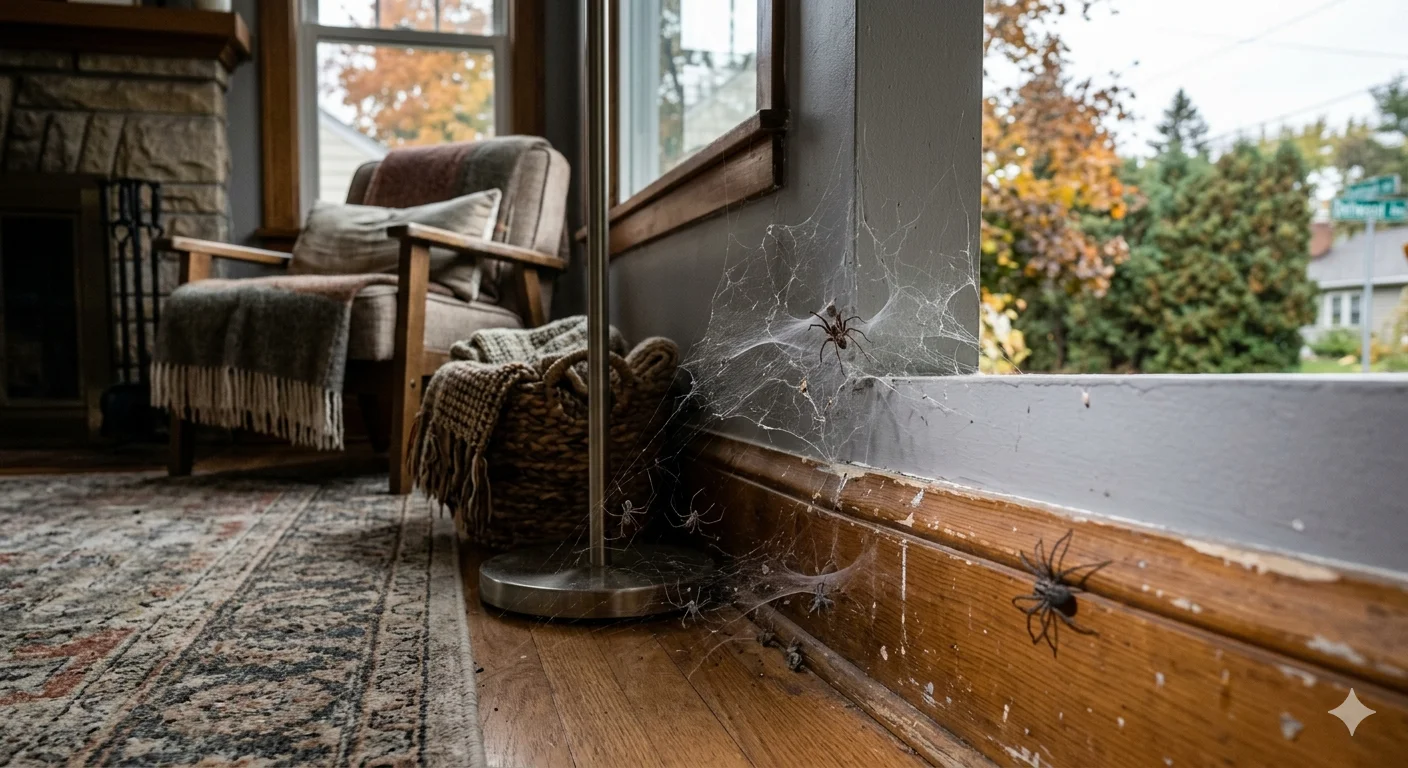
If you’ve started noticing more spiders in house corners, basement windows, or along the garage wall, you’re not imagining it. Spiders tend to show up where homes offer what they need: shelter, steady insect activity, and quiet places to hide. For many Dellwood homeowners, that means occasional sightings are normal, but repeated activity can point to bigger conditions around clutter, moisture, or gaps that let pests move indoors.
This guide explains why spiders show up in Dellwood homes, which ones you’re most likely to see, what signs suggest more than a random visitor, and which prevention steps actually make a difference. If you’re trying to understand home spider issues without jumping straight to worst-case scenarios, this is a practical place to start.
Why Spiders Show Up In Dellwood Homes
Spiders don’t usually come inside because they prefer living with people. They come in because your home gives them three useful things: food, cover, and stable conditions. If other insects are active around your property, spiders often follow. If storage areas are crowded, dark, and undisturbed, they stick around. And when outdoor temperatures swing, they look for more protected spaces.
That’s why spiders in Dellwood MN homes are often a symptom of the environment, not just the spider itself. A single spider may not mean much. But if you keep seeing them, it usually means your home is offering easy access or a reliable food source.
Common Indoor And Outdoor Hiding Spots
Spiders are built for staying out of sight. Indoors, they tend to settle in places that are quiet, rarely cleaned, or close to other pest activity. Common spots include:
- Basement corners and ceiling edges
- Window frames and sills
- Attached garages and storage shelves
- Utility rooms and laundry areas
- Behind furniture or stacked boxes
- Under sinks, especially where moisture lingers
- Entry areas near doors that open often
Outside, they gather where insects gather. That usually means:
- Around exterior lights
- In shrubs touching the house
- Under decks and porches
- Along foundation edges
- In sheds, wood piles, and play structures
- Around soffits, eaves, and gutters
One small but important detail: outdoor lighting can quietly increase spider activity. Porch lights, garage coach lights, and bright landscape fixtures attract flying insects at night. Where insects collect, spiders set up nearby. So when homeowners talk about seeing webs around doors and windows, that pattern usually has a simple explanation.
Seasonal Changes That Bring Spiders Inside
Seasonal movement matters more than most people realize. In Minnesota, spiders often become more noticeable in late summer and fall, when cooler nights and changing moisture levels push insects, and the predators that feed on them, closer to homes.
Some spiders also wander more during mating season, which is one reason you may suddenly spot one crossing a wall or floor when the house seemed spider-free a week earlier. It doesn’t always mean an infestation. Sometimes it means a mature spider has left its hiding place.
Winter changes things again. Heated indoor air creates a more stable environment than the outdoors, especially in basements, attached garages, and utility spaces. If spiders get in before temperatures drop, they can remain active in low-traffic parts of the home. Then spring arrives, insect activity picks up again, and the cycle restarts.
For Dellwood homeowners, this is why prevention works best when it’s done before activity spikes, not after webs have built up in every corner.
The Most Common Spiders In Dellwood MN
Most Dellwood MN spiders that turn up around the house are more annoying than dangerous. They’re usually there because they’ve found insects to eat or protected places to stay. That doesn’t mean you want them indoors, but it does help to know that most sightings are not emergencies.
Which Species Are Usually Harmless
Homeowners in this area commonly run into a few familiar types:
- House spiders: Small to medium-sized spiders that build messy webs in corners, ceilings, basements, and garages.
- Cellar spiders: Often found in basements and lower-level ceilings, with long thin legs and loose webs.
- Wolf spiders: Fast-moving hunters that don’t rely on webs as much. They may show up in garages, lower levels, or near foundations.
- Orb-weavers: More often seen outside around landscaping, decks, and lighting, though they can appear near entry points.
- Jumping spiders: Compact, active spiders that may appear on walls, windows, and sunny indoor surfaces.
These are usually harmless to people and actually help reduce insect populations outdoors. The issue is less about danger and more about comfort, repeated indoor sightings, and the conditions that allow spider activity to continue.
When A Spider Problem May Need Attention
A spider problem may need closer attention when sightings become frequent, concentrated, or tied to other pest activity. A few signs matter more than one random web in the basement:
- You’re seeing spiders in multiple rooms each week
- Webs reappear quickly after cleaning
- Egg sacs are attached to webs or hidden in corners
- You’re noticing other insects indoors too
- Activity is building up in one area, such as a crawl space, garage, or lower level
In other words, the real concern often isn’t just the spider. It’s what the spider is telling you about the house. Spiders stay where they can eat. If there’s enough prey to support them, your home may also have an underlying insect issue that needs to be addressed.
That’s an important distinction for local SEO service pages too: homeowners searching for spiders in house problems often need broader pest exclusion and prevention, not just one-time removal.
Signs You Have More Than The Occasional Spider
Most homes will get the occasional spider. That’s normal. The bigger question is whether you’re dealing with isolated sightings or an environment that keeps producing them.
Webs, Egg Sacs, And Repeated Sightings
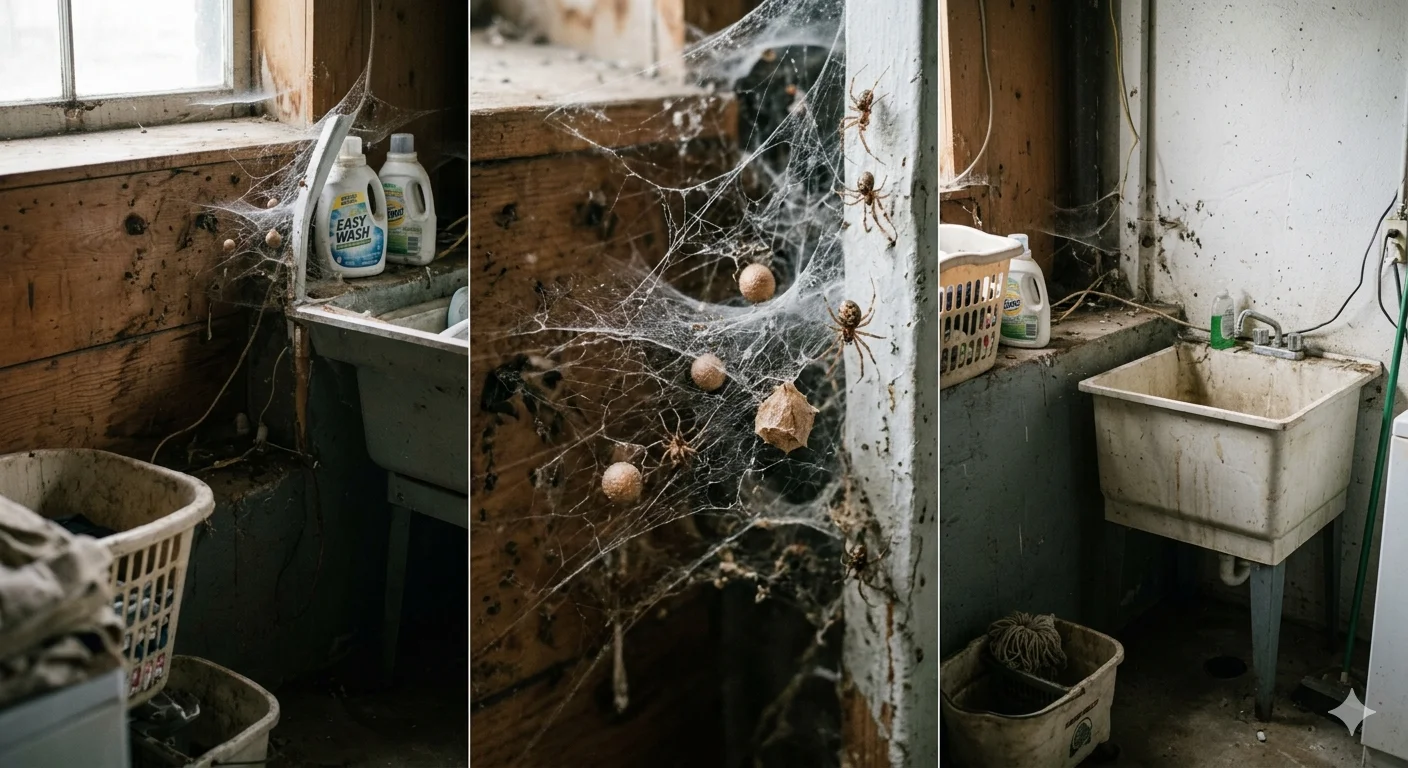
One web in a garage corner isn’t unusual. But repeated webs in the same rooms, especially after cleaning, suggest active spider presence rather than a one-off visitor.
Watch for:
- Fresh webs appearing along ceiling lines, window frames, and storage areas
- Egg sacs, which may look like small silk-wrapped balls attached to webs or tucked into corners
- Repeated sightings in the same stretch of the home
- Spider movement at night, especially around lit areas or lower levels
Egg sacs matter because they can turn a minor issue into a larger one later. You may not see dozens of spiders now, but if sacs remain undisturbed in storage rooms, garages, or basement corners, activity can increase over time.
Areas Of The Home Where Spider Activity Builds Up
Spider activity usually clusters in places that combine low disturbance with access to insects. The most common trouble spots include:
- Basements and crawl-space-adjacent areas
- Garages with cardboard storage or cluttered shelving
- Mudrooms and entry points near landscaping
- Attics and upper corners near vents or rooflines
- Window wells and lower-level windows
- Rooms with excess humidity or inconsistent cleaning
Clutter plays a bigger role than many homeowners expect. Cardboard boxes, stacked bins, old décor, and unused items create hiding spaces not only for spiders, but for the insects they feed on. That’s why home spider issues often persist in storage-heavy spaces even when the rest of the house seems clean.
If your sightings are concentrated around one level or one side of the home, that can also point to an exterior source, shrubs against siding, foundation gaps, lighting near doors, or insect buildup around moisture-prone areas.
Spider Prevention In Dellwood: Practical Steps For Homeowners
Good prevention is less about chasing individual spiders and more about making your home less attractive to them in the first place. If you want spider prevention in Dellwood that actually works, focus on the conditions spiders need to survive.
Reduce Insects, Moisture, And Clutter
Start with what attracts spiders: food and shelter.
Cut down insect activity
- Switch bright white exterior bulbs to warmer, less insect-attracting options where practical
- Keep door sweeps in good shape so flying and crawling insects don’t enter easily
- Clean up food crumbs and spills, especially in lower-level rec rooms, kitchens, and pet areas
- Address other pest activity promptly, because spiders follow prey
Control moisture
- Use a dehumidifier in damp basements
- Fix plumbing drips and condensation issues
- Keep gutters moving water away from the foundation
- Check under sinks and around laundry hookups for lingering dampness
Reduce clutter
- Replace old cardboard storage with sealed plastic bins
- Keep garage and basement items elevated and organized
- Avoid letting paper, fabric, and unused household items pile up in corners
- Vacuum low-traffic spaces regularly, even when they “look fine”
This combination matters because spiders don’t need much. A few insects, a dark corner, and long gaps between cleanings can be enough.
Seal Entry Points Around The Home
Exclusion is one of the most useful long-term steps you can take. Spiders can get indoors through surprisingly small openings, especially around aging trim, utility penetrations, and frequently used entry doors.
Check these areas first:
- Gaps around windows and door frames
- Torn screens on windows or vents
- Openings where pipes, cables, or lines enter the home
- Cracks along the foundation or siding transitions
- Garage door edges and weather stripping
- Door sweeps on side, patio, and front doors
Also look at the yard-to-house connection. Trim shrubs and branches back from siding, reduce heavy vegetation near entry points, and keep mulch or stored materials from crowding the foundation too closely. Exterior webs around lights, soffits, and porch corners should be removed regularly so they don’t become established.
For many Dellwood homeowners, the best results come from doing several smaller things consistently rather than relying on one dramatic fix. Clean. Declutter. Seal. Reduce insects. That’s the pattern that makes a real difference.
What To Do About Spiders In House Without Making It Worse
When you spot spiders indoors, it’s easy to go straight into panic-cleaning mode. But a few simple steps work better than random spraying or leaving webs untouched for weeks.
Safe Cleaning And Removal Tips
For occasional spiders, start with direct removal and cleanup:
- Vacuum spiders, webs, and egg sacs carefully
- Empty the vacuum canister or bag promptly after removal
- Wipe down corners, window edges, and baseboards where silk collects
- Remove clutter near the sighting area so you can inspect fully
- Check nearby spaces for insect activity, moisture, or hidden webs
If you’re cleaning a garage, basement, or storage room, wear gloves and move items carefully. Not because every spider is dangerous, but because old boxes and hidden corners can contain dust, debris, and other pests too.
One common mistake is treating only the visible web. If the surrounding conditions stay the same, the spider activity often returns. Another is overusing store-bought sprays without understanding where spiders are actually harboring. In many cases, that just scatters activity or creates a false sense that the problem is handled.
When To Monitor Versus When To Act Quickly
You can usually monitor the situation when:
- You’ve seen one or two spiders total
- Sightings are isolated to a garage or basement
- There are no egg sacs or recurring webs
- Activity drops after cleaning and decluttering
You should act more quickly when:
- Sightings are becoming frequent across multiple rooms
- Egg sacs or large web clusters are present
- Other insects are active indoors
- The same problem spots keep returning even though cleanup
- Someone in the home is especially sensitive, anxious, or uncomfortable with the activity
At that point, it makes sense to look beyond do-it-yourself cleanup and assess the broader pest conditions around the property. For internal linking, this article naturally supports a main Dellwood service page as well as more specific spider-control content focused on inspection, exclusion, and ongoing prevention.
The bottom line: don’t ignore the issue, but don’t make it bigger than it is either. Most spider problems respond best to calm inspection and practical correction of the conditions causing them.
Conclusion
Seeing a few spiders now and then doesn’t automatically mean something is wrong. But if they keep showing up, there’s usually a reason, other insects, moisture, clutter, easy entry points, or all four at once.
If you’re dealing with spiders in Dellwood MN homes, the most effective next step is to think like a prevention-minded homeowner, not just someone reacting to a single sighting. Clean low-traffic areas, reduce insect pressure, seal gaps, and pay attention to the rooms where activity keeps building. That approach does more than remove spiders you can see. It helps make your home less inviting to the ones you haven’t noticed yet.
And for Dellwood homeowners, that’s really the goal: fewer surprises in the corners, fewer recurring webs, and a home that feels like yours again.