

You don’t need to love spiders to know one thing: if you’re seeing them often indoors, there’s usually a reason. A spider on the ceiling here and there can be normal. But regular webs in corners, spiders in the basement, or surprise sightings in closets and bathrooms often point to conditions that make your home easy for them to live in.
Good spider control for homes starts with understanding what’s drawing them inside in the first place. Spiders usually follow food, shelter, moisture, and easy access. That means the real fix isn’t just knocking down a web and hoping for the best. It’s reducing what attracts them, removing the places they hide, and making it harder for them to get back in.
If you want fewer spiders in house spaces this year, the steps below will help you tackle the problem in a practical, safe, and long-lasting way.
Why Spiders End Up In House Spaces
Most spiders don’t come indoors because they’re looking for people. They come in because your home offers what they need: prey, protection, and stable conditions. In many cases, spiders enter through tiny cracks around doors, windows, siding gaps, vents, utility openings, or damaged screens. Once inside, they settle where they’re least likely to be disturbed.
You’ll often find spiders in quieter areas like basements, attics, garages, crawl spaces, laundry rooms, closets, and behind furniture. Some species build webs and wait for insects to get trapped. Others hunt and move around more, which is why you might notice them darting across floors or walls.
Common Conditions That Attract Spiders
The biggest reason spiders stick around is food. If your home already has insect activity, it can support more spider activity too. Flies, gnats, ants, moths, roaches, and other pests create an easy food source. In that sense, spider problems are sometimes a symptom of a broader pest issue rather than a standalone problem.
A few common conditions make home spider control harder:
- Outdoor lights that attract insects: Porch lights and garage lights pull insects close to the structure, and spiders follow.
- Cluttered storage areas: Cardboard boxes, stacked items, and undisturbed corners create ideal hiding places.
- Moisture problems: Damp basements, leaky pipes, and humid crawl spaces attract insects and make spaces more inviting.
- Gaps and cracks: Easy entry points around foundations, doors, and windows make access simple.
- Vegetation against the house: Shrubs, mulch, firewood, and dense ground cover give spiders shelter near entry points.
Seasonal changes matter too. In cooler months, spiders may move inside seeking stable temperatures. In warmer months, higher insect activity can support more webs around windows, doors, and exterior eaves.
When A Few Spiders Becomes A Spider Infestation
Seeing one spider once in a while doesn’t always mean you have a spider infestation. But repeated sightings in multiple rooms, fresh webs appearing soon after cleanup, or the presence of egg sacs suggest a larger issue.
Here are a few signs the problem is growing:
- You’re removing webs constantly, but they keep coming back.
- You notice spiders in daytime, not just at night or in quiet areas.
- There are egg sacs in corners, vents, basements, or garages.
- You’re also seeing other pests indoors.
- Multiple family members are noticing bites, webs, or frequent sightings.
At that point, it’s smart to look beyond the spiders themselves. If insect populations are active indoors, spider activity often increases right along with them.
How To Get Rid Of Spiders Safely And Effectively
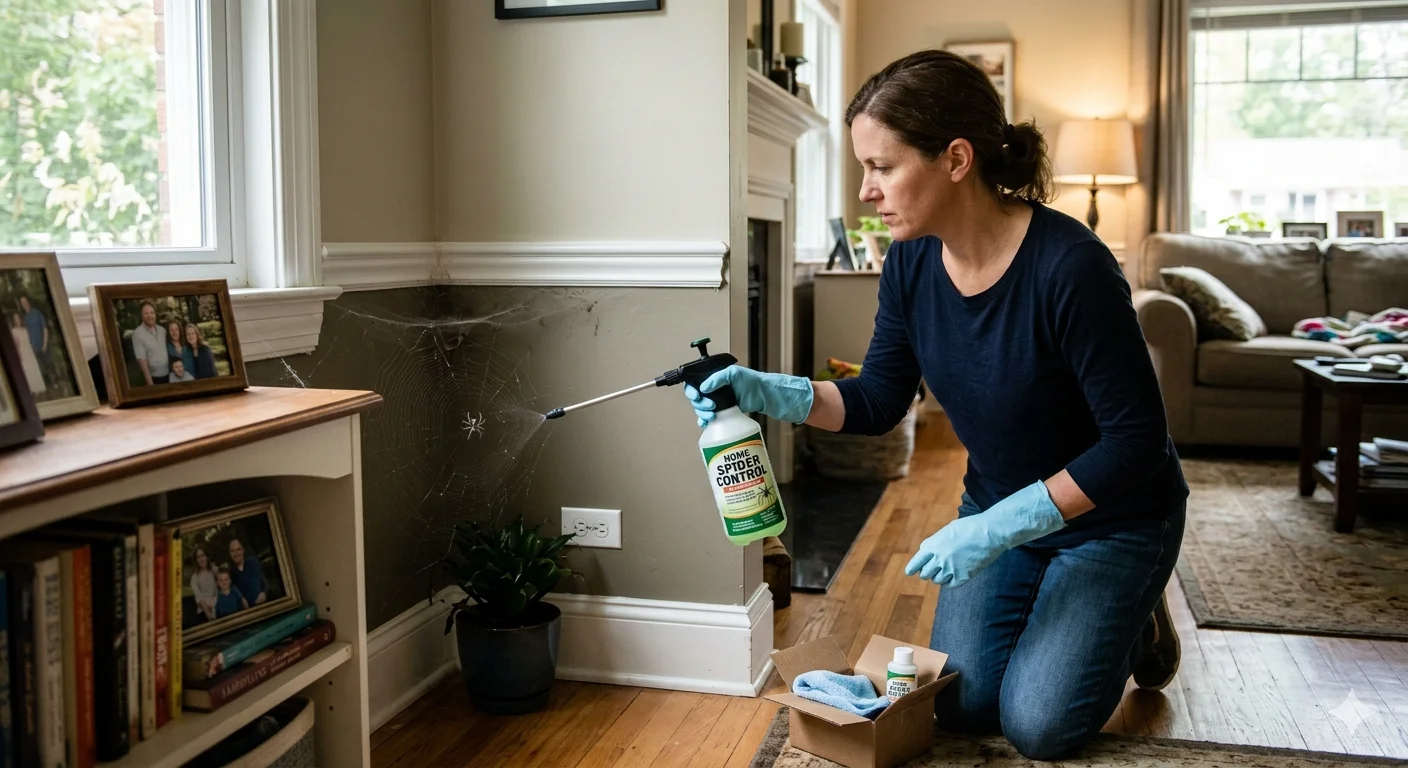
If you’re wondering how to get rid of spiders, the best approach is part cleanup, part prevention, and part pest reduction. Quick fixes can help in the moment, but long-term spider control for homes depends on removing what supports them.
Remove Webs, Egg Sacs, And Hiding Spots
Start with physical removal. Use a vacuum with a hose attachment or a long-handled duster to remove webs from ceilings, corners, under furniture, around window frames, in garages, and along baseboards. Vacuuming is especially useful because it can also remove spiders and egg sacs directly.
Be thorough. Missing egg sacs can mean a new wave of spiders later.
After removal:
- Empty the vacuum outdoors if possible.
- Reduce stacked storage, especially cardboard boxes.
- Clean behind furniture and appliances.
- Organize closets, attics, garages, and basement shelves.
The less shelter available, the fewer places spiders have to settle unnoticed.
Reduce The Insects Spiders Feed On
This step is often overlooked, but it matters a lot. If your home has a steady supply of insects, spiders have a reason to stay. So effective home spider control usually includes broader pest prevention.
Focus on the basics:
- Keep food sealed and clean up crumbs quickly.
- Address fruit flies, ants, pantry pests, or roaches promptly.
- Fix leaks and reduce standing water.
- Use yellow or warm outdoor bulbs when possible to attract fewer insects near entry points.
- Keep window screens in good repair.
In other words, when you reduce insect activity, you remove the food source that supports spider infestation conditions.
Use Indoor And Outdoor Home Spider Control Methods
For indoor spaces, sticky traps placed along walls, behind furniture, and in garages or basements can help monitor activity and catch wandering spiders. They’re useful for seeing where movement is happening most often.
You can also focus on targeted treatment areas where spiders tend to rest or travel, such as:
- Corners of rooms
- Window and door frames
- Behind stored items
- Basement sill plates
- Garage edges
- Exterior foundation lines
- Eaves, soffits, and around light fixtures
Outdoor work is just as important as indoor work. Knock down webs around entry points, trim shrubs away from the house, and keep mulch or debris from building up directly against the foundation. If you only treat indoors, spiders may keep reappearing from outside populations.
If you use any pest control products yourself, follow label directions exactly and use them carefully around kids and pets. In many homes, physical removal and exclusion do most of the heavy lifting.
Spider Prevention Tips For Long-Term Protection
The best spider prevention plan is simple: make your home harder to enter, less attractive to insects, and less comfortable for spiders to hide in. That combination works better than relying on one spray or one-time cleanup.
Seal Entry Points Around The Home
Spiders can get through surprisingly small openings. Walk the exterior of your home and look closely for gaps around:
- Door thresholds and weatherstripping
- Window frames
- Utility penetrations
- Foundation cracks
- Vents and soffits
- Garage doors
Use caulk where appropriate, replace worn weatherstripping, repair torn screens, and install door sweeps if light is visible under exterior doors. Even basic exclusion work can make a big difference in spider prevention.
Cut Down Clutter, Moisture, And Outdoor Harborage
Inside the house, reduce clutter in low-traffic areas. Storage bins with tight lids are better than cardboard, especially in basements and garages. Keep items off the floor when possible to make inspection and cleaning easier.
Next, manage moisture. Use a dehumidifier in damp basements, fix plumbing leaks, and improve ventilation in crawl spaces, bathrooms, or laundry areas. Moisture doesn’t just help insects thrive: it creates the kind of stable environment many pests prefer.
Outside, create a little breathing room between your home and the landscape:
- Trim shrubs and branches away from siding and windows.
- Move firewood away from the foundation.
- Limit dense ground cover near the home.
- Rake leaves and remove yard debris.
- Keep trash and recycling areas tidy.
These steps may seem small on their own. Together, they make the property less inviting and help keep spiders in house areas from becoming an ongoing pattern.
When To Call A Professional For Spider Control
Sometimes DIY efforts work well. Sometimes they don’t. If spiders keep showing up even though cleanup and sealing, or if you’re dealing with high activity in multiple parts of the home, it may be time for expert help.
Signs The Problem Needs Expert Help
Consider professional spider control if:
- Webs return quickly after removal.
- You’re seeing spiders regularly in living spaces.
- There are many spiders in the garage, attic, or basement.
- Egg sacs keep appearing.
- You suspect another pest issue is feeding the problem.
- You’re concerned about potentially harmful species in your area.
A professional can identify where spiders are nesting, where they’re entering, and whether another pest population is helping drive the issue. That broader diagnosis is often what homeowners miss.
How Ongoing Service Helps Prevent Reinfestation
Ongoing service can be useful because spider problems often start outside and move inward over time. Routine inspections and treatments help reduce activity at the perimeter, catch contributing pest issues early, and adjust to seasonal changes.
That matters if your home has recurring conditions like heavy vegetation, moisture-prone spaces, nearby insect pressure, or repeated sightings in the same rooms. Instead of reacting every time you see a spider, you’re addressing the conditions that allow reinfestation.
For many homeowners, that’s the real value of professional help: not just removing spiders today, but keeping the environment from favoring them next month too.
Conclusion
Spider control for homes works best when you treat the cause, not just the symptom. Spiders show up because your home offers food, shelter, moisture, and access. So if you want lasting results, focus on the full picture: remove webs and egg sacs, reduce other pest activity, seal entry points, cut clutter, and make the outside of your home less inviting.
If you’re only seeing an occasional spider, a few prevention steps may be enough. But if you’re dealing with repeated sightings or what looks like a spider infestation, taking a more complete approach, or bringing in a professional, can save you a lot of frustration. The goal isn’t perfection. It’s a home that’s much less appealing to spiders in the first place.