

Cockroaches are good at staying out of sight, until they aren’t. By the time you spot one skittering across the floor in daylight, there’s often already a larger issue hiding behind walls, under appliances, or inside cabinets. That’s why learning the early signs of a cockroach infestation matters. Small clues like pepper-like specks, a stale oily smell, or tiny brown casings can point to a growing roach problem long before it feels obvious.
If you own a home, run a restaurant, manage an office, or oversee a retail space, knowing what to look for can help you act before roaches spread. Below, you’ll find the most common cockroach signs, where they tend to show up first, what those clues usually mean, and when simple roach control steps aren’t enough anymore.
Why Early Cockroach Signs Matter
A cockroach infestation rarely starts as a dramatic event. More often, it begins with a few insects finding moisture, food, and shelter in the right place. Then it grows quietly.
That quiet part is what makes roaches so difficult. They’re nocturnal, fast, and excellent at squeezing into narrow cracks. Many species, including German cockroaches, reproduce quickly. A single egg case can contain dozens of developing roaches, and under favorable indoor conditions, populations can build much faster than most people expect.
Early detection matters for three big reasons:
- Roaches spread fast. If you wait until you see them regularly, the infestation may already be well established.
- They contaminate surfaces. Roach droppings, saliva, shed skins, and body parts can end up in food storage areas, prep spaces, and along counters.
- They can affect health. Cockroach allergens are a known asthma and allergy trigger, especially for children, older adults, and people in buildings with ongoing pest issues.
For business operators, there’s another layer: visible cockroach signs can damage customer trust and create sanitation problems. For homeowners, the issue is often peace of mind as much as pest control. Either way, catching the problem early gives you more options and usually makes treatment easier.
The Most Common Signs Of A Cockroach Infestation
Not every sign is dramatic. In fact, the earliest signs of a cockroach infestation are often easy to dismiss as dust, dirt, or random debris. The key is pattern. If you keep finding the same clues in the same kinds of places, pay attention.
Roach Droppings In Cabinets, Drawers, And Corners
One of the most common cockroach signs is roach droppings. Their appearance can vary by species and size, but small roaches often leave specks that look like black pepper, coffee grounds, or dark flecks. Larger roaches may leave cylindrical droppings with ridges.
You’ll usually find them:
- Along cabinet edges
- In pantry corners
- Inside drawers
- Under sinks
- Behind toilets
- Around baseboards
- Near pet food storage
Fresh droppings usually mean active traffic. If they keep reappearing after cleaning, that’s a strong clue you’re dealing with an active cockroach infestation rather than leftover debris.
Musty Odors, Smear Marks, And Shed Skins
A heavier roach problem often comes with a distinct smell. Many people describe it as musty, oily, or stale. In enclosed spaces, that odor can become surprisingly noticeable. If a room smells off and you can’t pinpoint why, roaches may be part of the answer.
You may also notice:
- Smear marks along walls or horizontal surfaces, especially in damp areas where roaches travel repeatedly
- Shed skins left behind as immature roaches grow and molt
These clues are easy to overlook, but together they tell a story: roaches aren’t just passing through. They’re using the area regularly enough to leave residue.
Egg Casings And Live Or Dead Roaches
Egg casings, called oothecae, are another important inspection cue. They’re small, capsule-shaped, and often brown or reddish-brown. You might find them tucked into cabinet hinges, behind appliances, inside clutter, or near cracks and crevices.
Seeing even a few egg casings usually means reproduction is happening nearby.
Then there’s the most obvious sign: live or dead roaches. If you only see a single roach once, that doesn’t always confirm a major infestation, but it should still raise suspicion, especially indoors. If you see roaches during the day, in multiple rooms, or repeatedly over several days, the population may be large enough that they’re being forced out of hiding.
That’s usually not a “wait and see” situation.
Where Cockroach Signs Usually Show Up First
Roaches don’t choose random hiding spots. They go where survival is easiest: warmth, moisture, darkness, and nearby food.
Kitchens, Bathrooms, Basements, And Laundry Areas
These are the classic trouble spots because they provide what roaches need most.
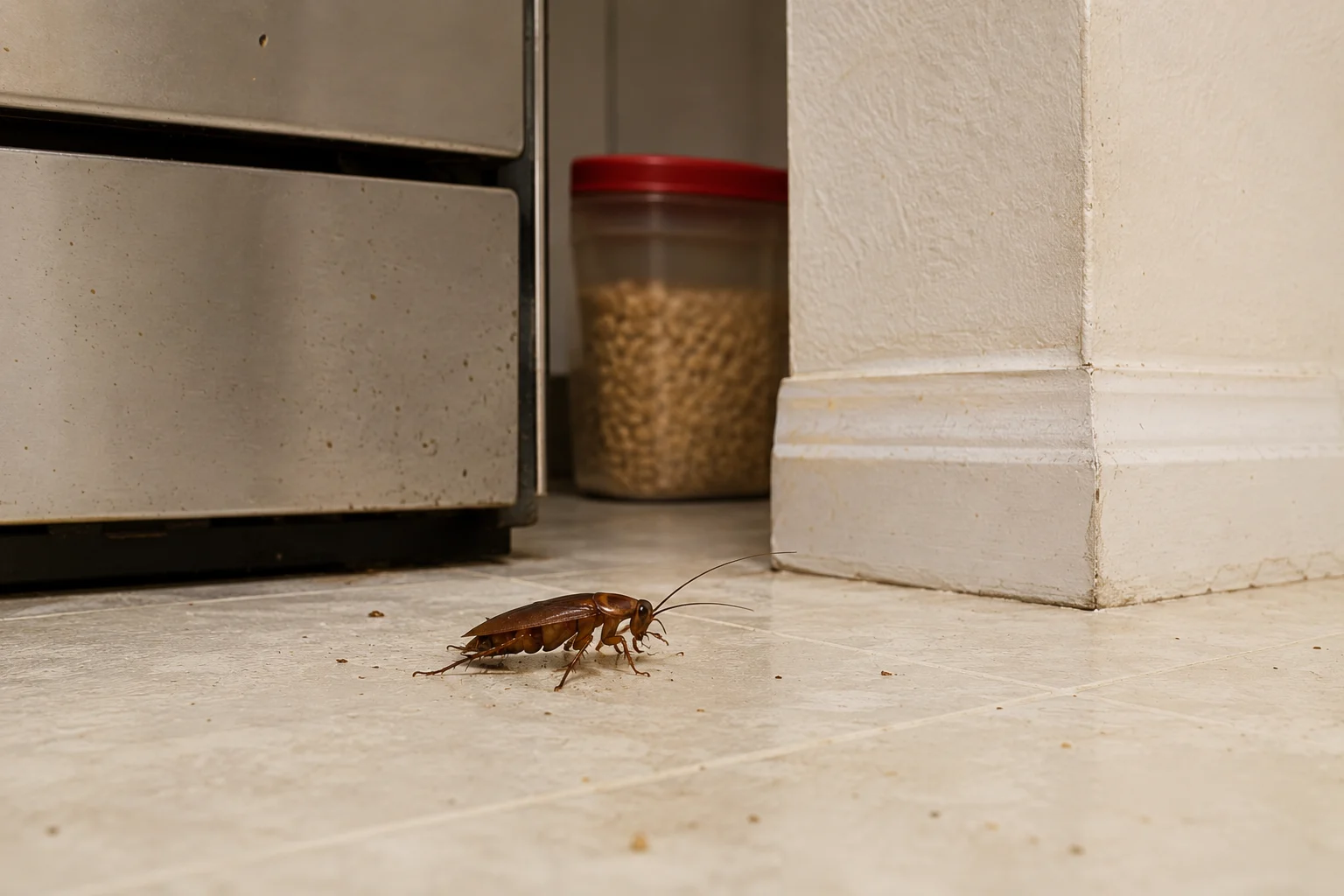
Kitchens are often ground zero. Crumbs, grease, food residue, water under the sink, and heat from appliances make them ideal. Check under the stove, behind the refrigerator, in pantry corners, and around trash storage.
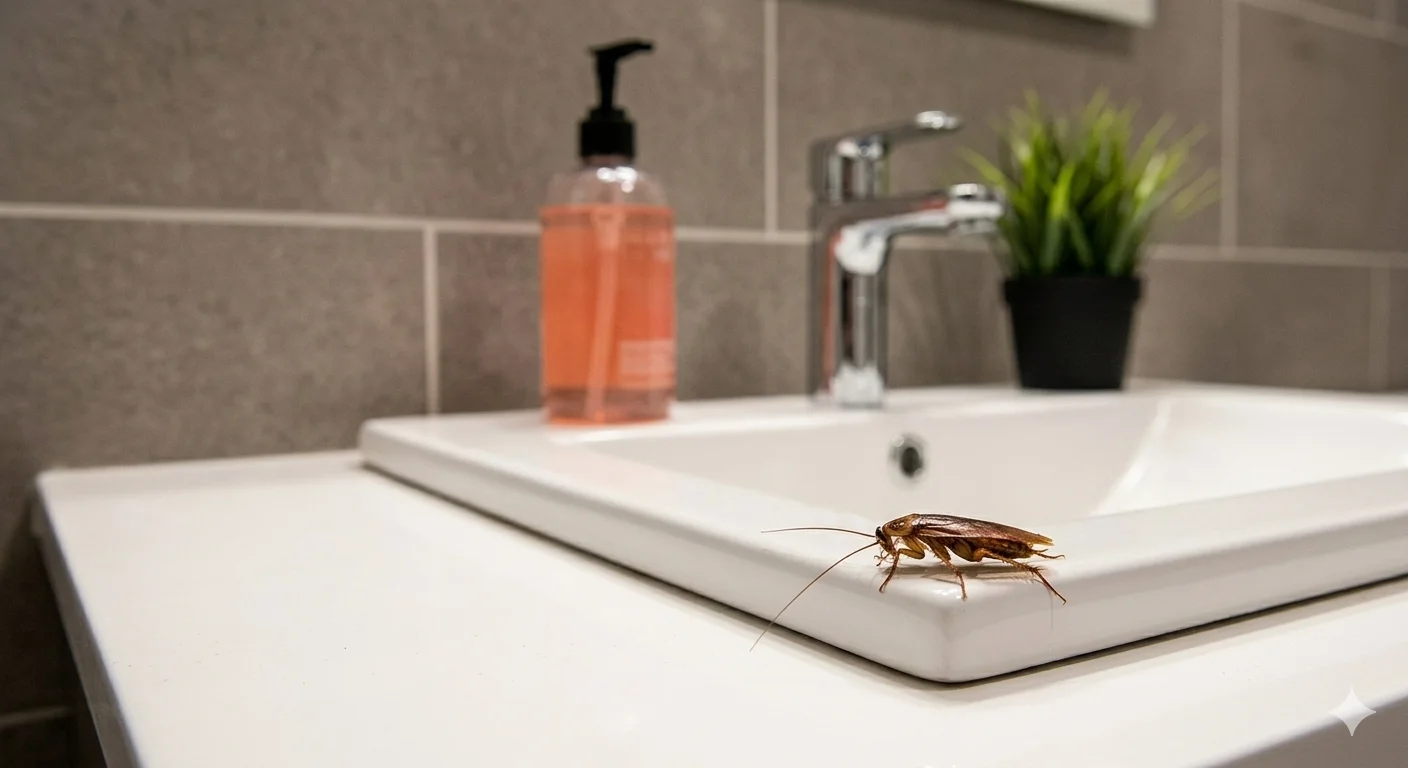
Bathrooms attract roaches because of moisture. Look around plumbing penetrations, vanity cabinets, behind toilets, and near tubs or showers.
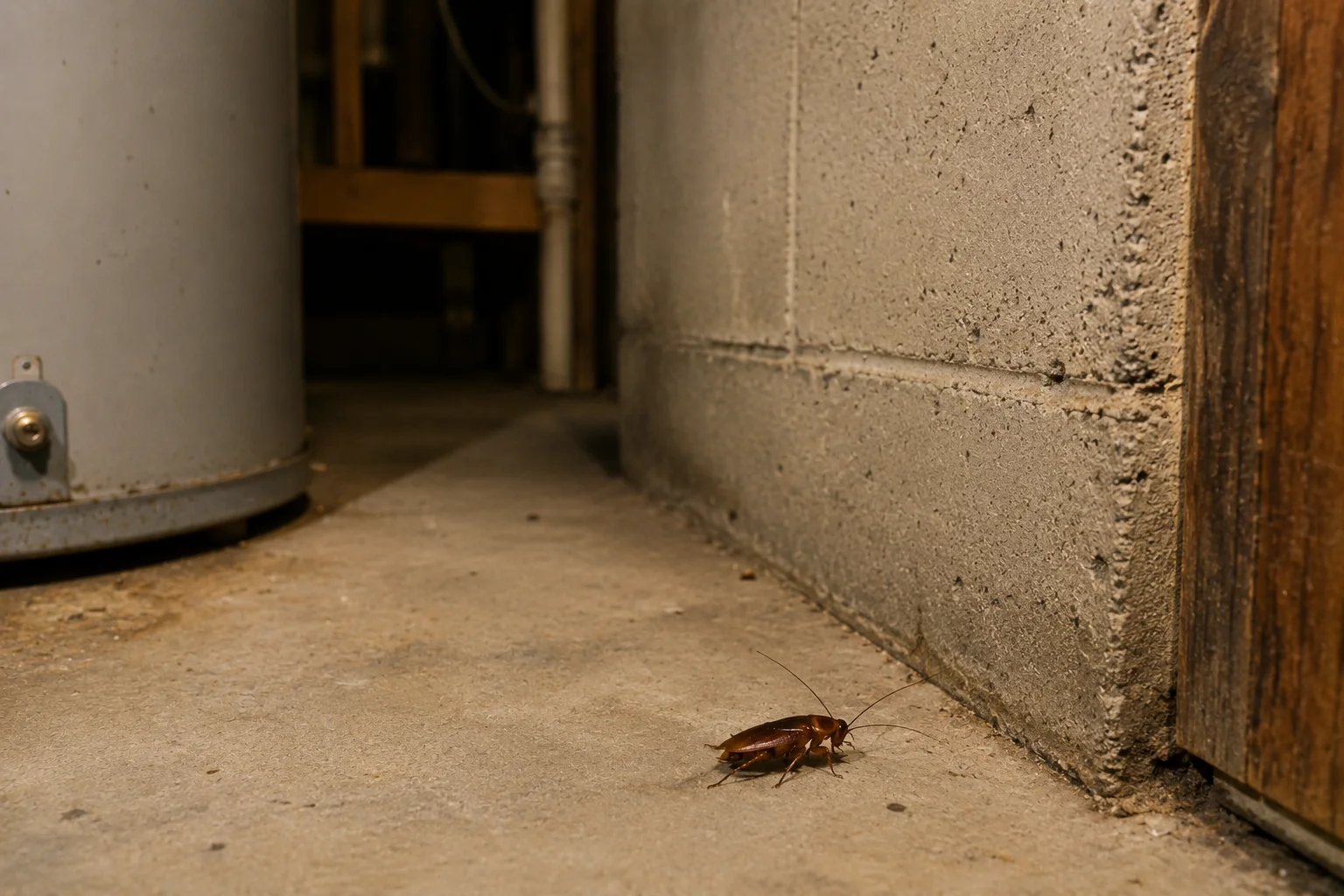
Basements can support infestations when they’re damp, cluttered, or used for cardboard storage. Roaches love protected spaces with little disturbance.
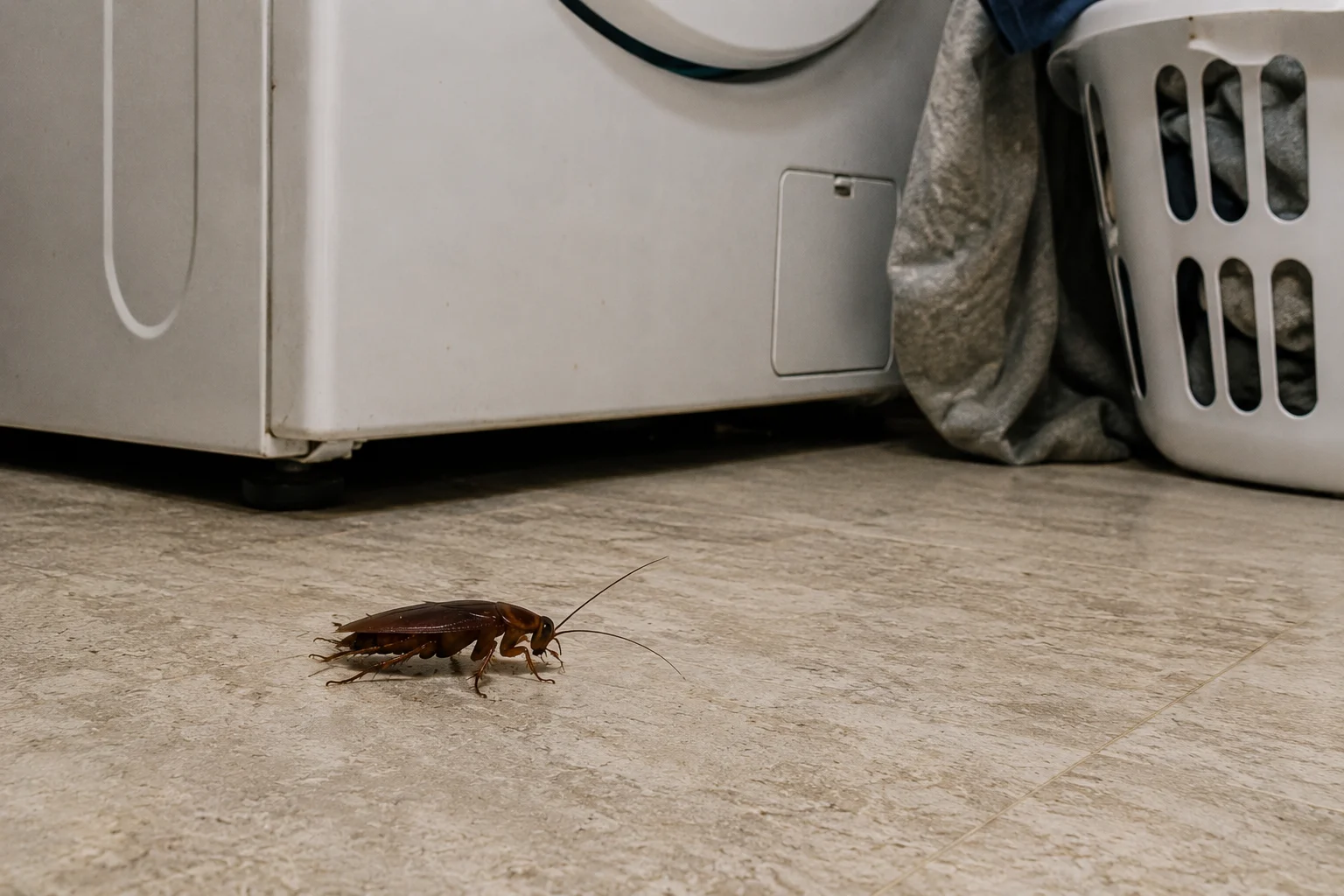
Laundry areas are another common surprise zone. Lint, warmth, occasional leaks, and dark gaps behind machines create good hiding conditions.
Hidden Spaces Behind Appliances And Inside Wall Voids
Some of the strongest cockroach signs show up in places you don’t inspect often.
Look closely at:
- Behind refrigerators and ovens
- Under dishwashers
- Inside or beneath cabinets
- Around water heater bases
- Behind electrical outlet covers, if inspection is safe and appropriate
- Around pipe entries under sinks
- In wall voids and gaps around baseboards
Roaches prefer tight spaces where their bodies touch surfaces on multiple sides. That’s why narrow cracks, folded cardboard, motor compartments, and hollow wall areas work so well for them.
If you notice signs concentrated around one appliance or plumbing line, that often points to a central harborage nearby.
What These Signs Say About The Size Of The Roach Problem
Not all evidence points to the same level of infestation. A few scattered clues may suggest early activity. Widespread signs across multiple rooms usually suggest a more established roach problem.
Here’s a practical way to read what you’re seeing:
- A few droppings in one area: possible early activity or a localized hiding spot
- Repeated droppings after cleaning: active movement and ongoing infestation
- Egg casings present: breeding is likely happening on-site
- Strong odor plus droppings and shed skins: a larger, longer-standing cockroach infestation
- Daytime sightings: often a sign of crowding, food competition, or a high population
- Signs in kitchens and bathrooms at the same time: likely spread beyond one isolated source
In short, roach activity usually means more than the one insect you happened to notice. Because they stay hidden, visible evidence tends to represent only a fraction of what’s present.
That’s why homeowners are often surprised when a “small issue” turns out to be much bigger once treatment starts.
When To Try Roach Control And When To Call A Professional
Some minor problems can respond to early roach control steps, especially if you catch them fast. Cleaning up food residue, reducing moisture, sealing cracks, and using targeted baits can help with light activity.
You may be able to start with basic action if:
- You’ve only found signs in one limited area
- There are no repeated daytime sightings
- You haven’t found multiple egg casings
- The issue appears recent
Still, DIY efforts often fall short when roaches are well established. Sprays from the hardware store can kill visible insects, but they usually don’t reach hidden nesting areas. Worse, some products can scatter roaches deeper into walls or make baiting less effective if used incorrectly.
Professional treatment is usually the better move when:
- You keep seeing roaches after cleaning and baiting
- Signs appear in several rooms
- You find egg casings, shed skins, and droppings together
- You notice a strong persistent odor
- The property is a restaurant, healthcare space, apartment unit, or shared commercial building
- Anyone in the home or building has asthma or allergy concerns
A professional can identify the species, locate harborages, judge how large the infestation is, and build a treatment plan that goes beyond surface-level spraying. In many cases, that’s what it takes to fully solve a cockroach infestation instead of chasing it room by room.
How To Reduce The Chance Of Another Cockroach Infestation
Once roaches are gone, prevention matters. If food, water, and hiding places remain easy to access, new activity can start again.
Focus on the basics consistently:
- Store food in sealed containers
- Clean crumbs, grease, and spills promptly
- Don’t leave pet food out overnight
- Empty trash regularly and keep lids closed
- Fix leaks under sinks, around toilets, and near appliances
- Reduce clutter, especially cardboard and paper storage
- Seal gaps around pipes, baseboards, and entry points
- Vacuum cracks, cabinet corners, and appliance gaps routinely
For businesses, prevention also means staff habits. Breakroom cleanup, receiving inspections, trash handling, and routine monitoring all matter. Roaches are excellent hitchhikers, so deliveries, used equipment, and storage boxes can bring them inside.
A good rule: if a space supports moisture and crumbs, it can support roaches too. Prevention is less about one big fix and more about removing the little advantages they rely on every day.
Conclusion
The signs of a cockroach infestation are usually there before the infestation feels obvious. Droppings in drawers, musty odors, smear marks, egg casings, and sightings near moisture or appliances all point to the same basic message: roaches have found conditions they like.
If you catch those clues early, you have a much better chance of limiting the damage, contamination, and cost. And if signs are persistent, widespread, or tied to health concerns, professional help is usually the smartest next step.
When it comes to a cockroach infestation, small clues rarely stay small for long.